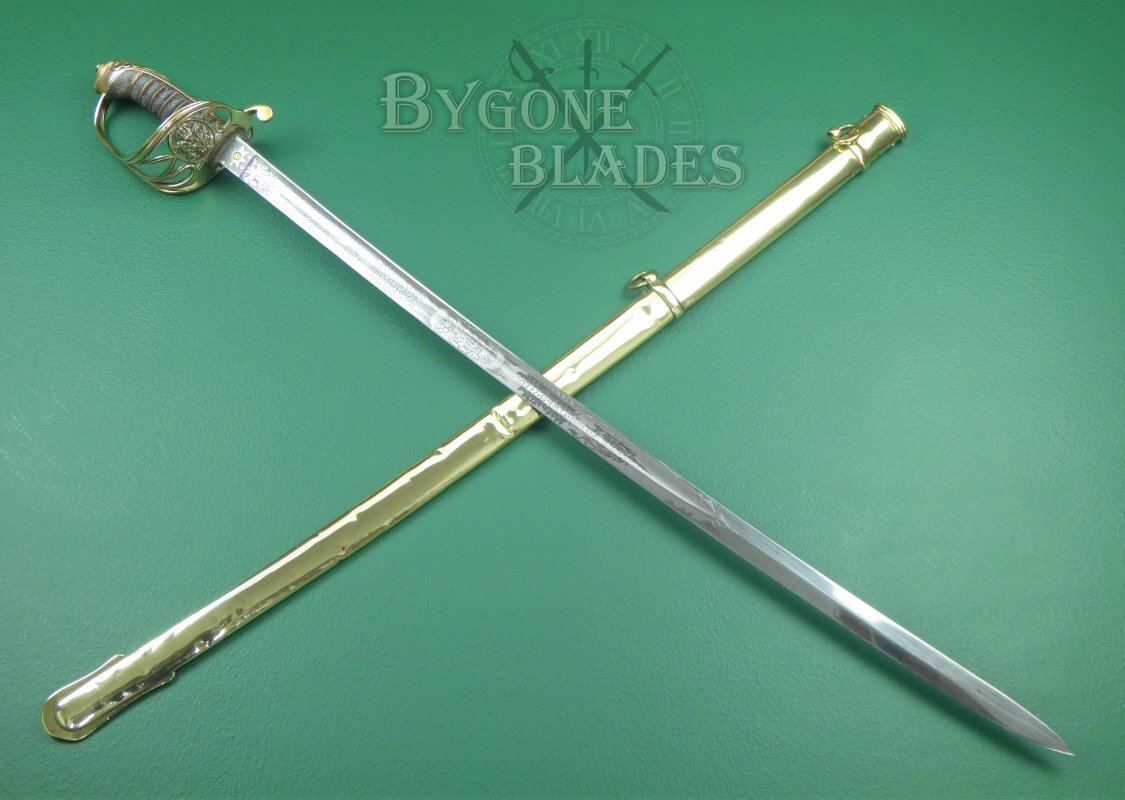
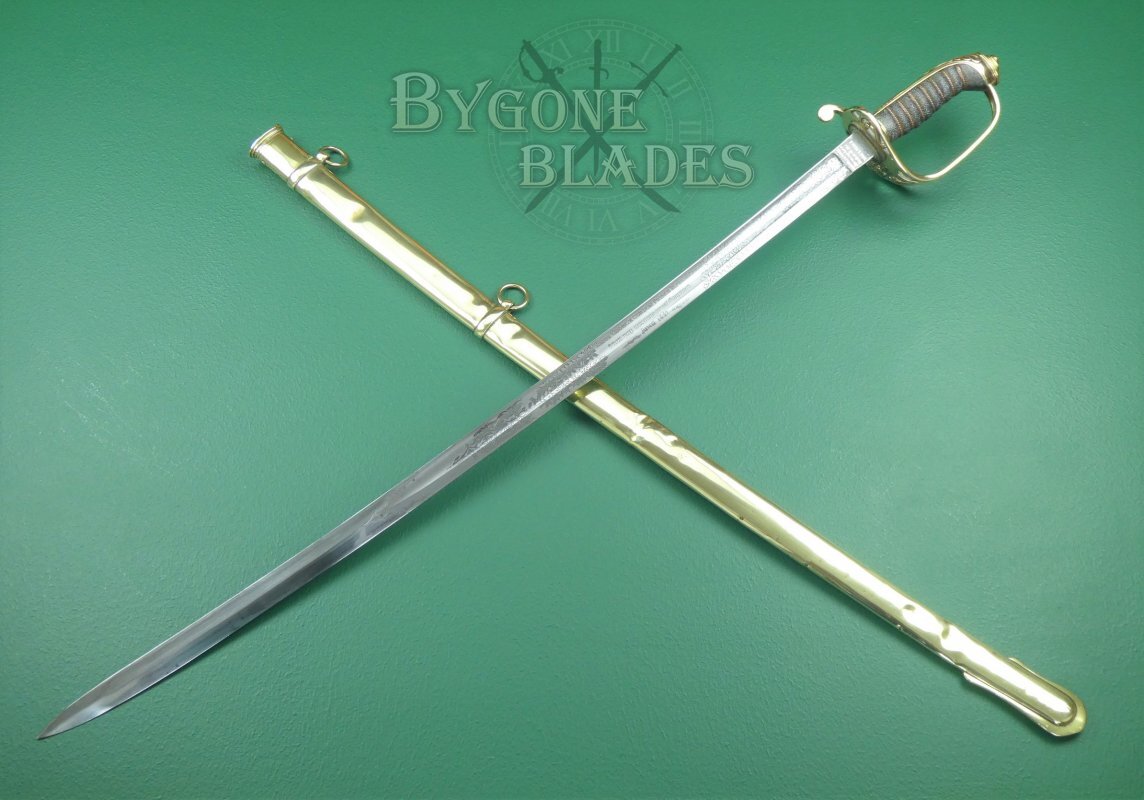
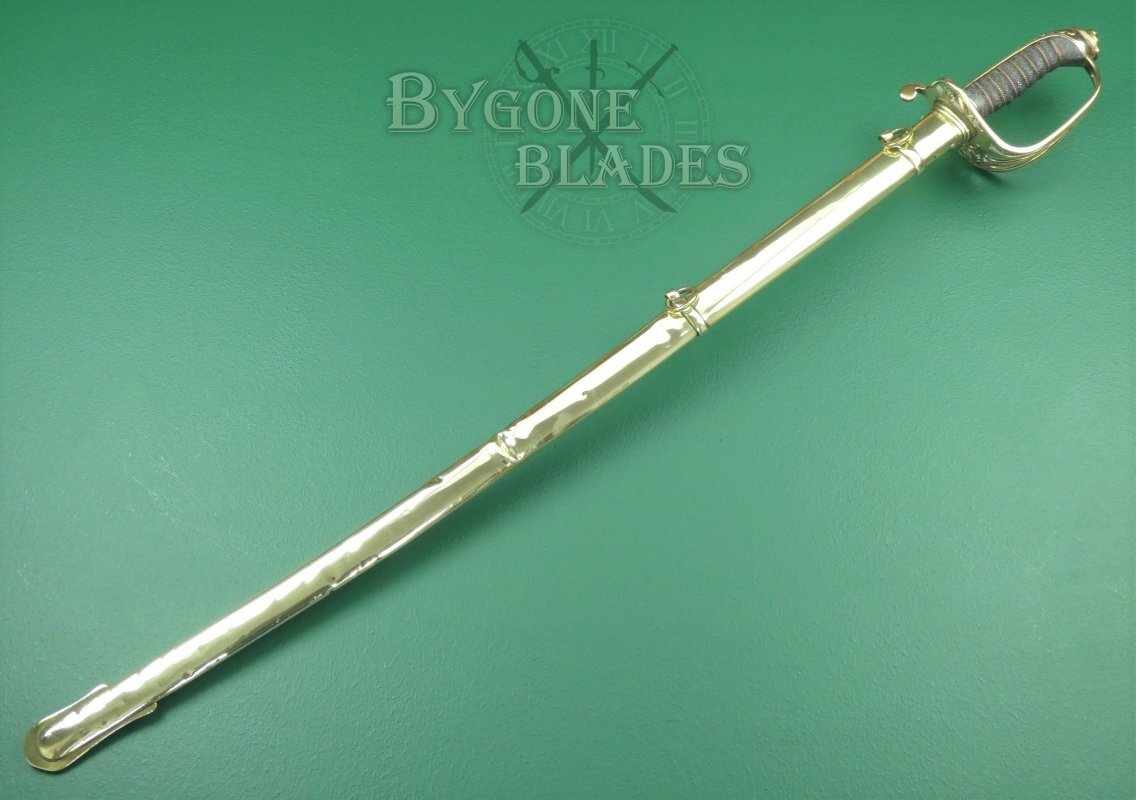
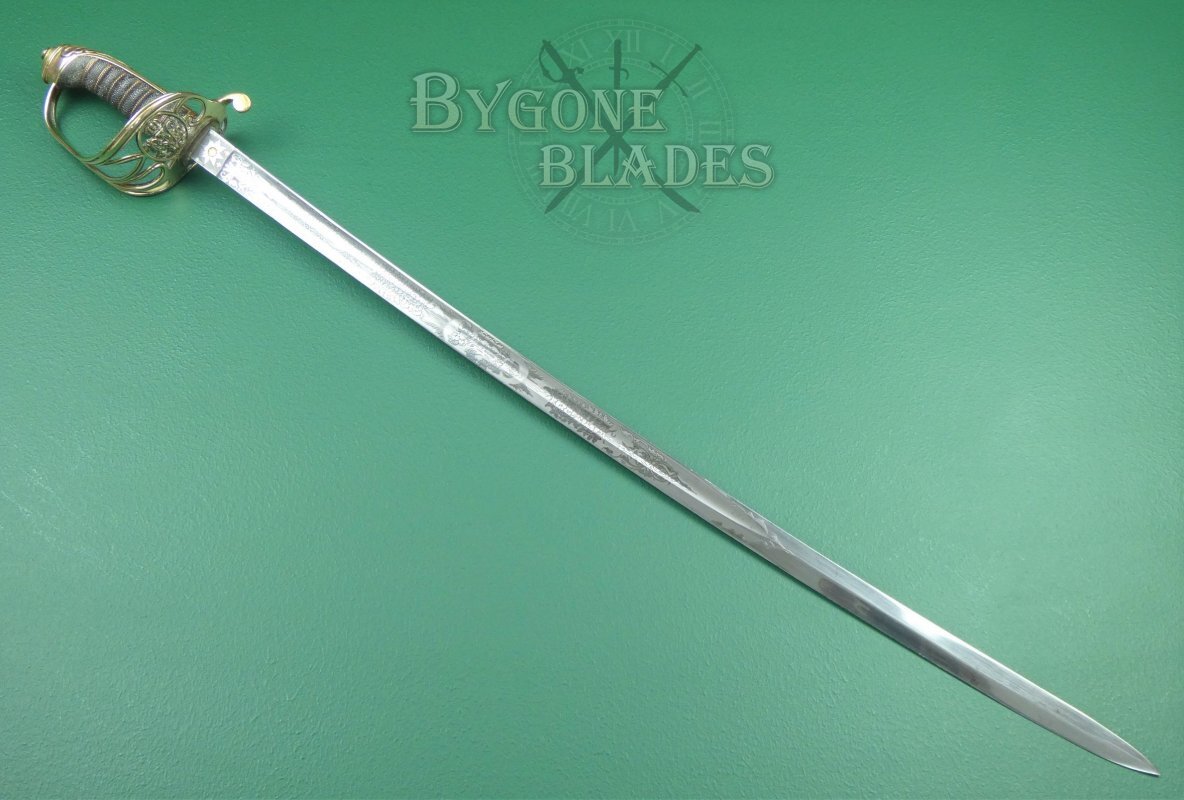
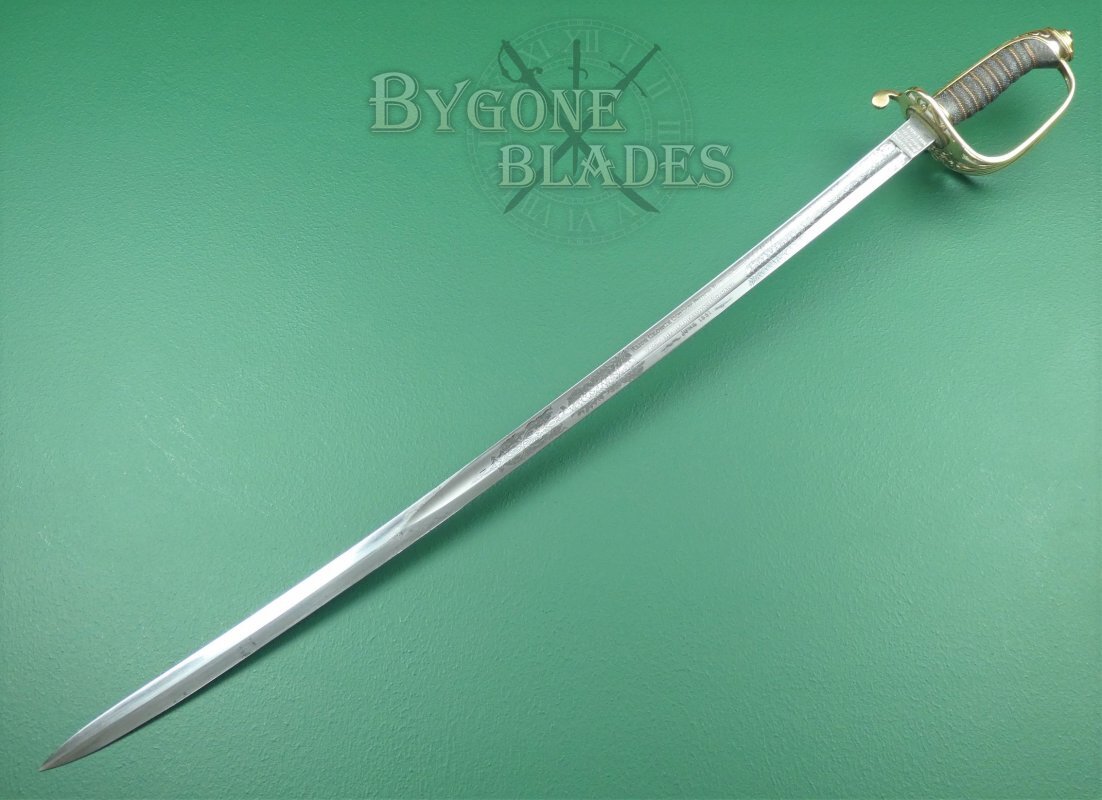
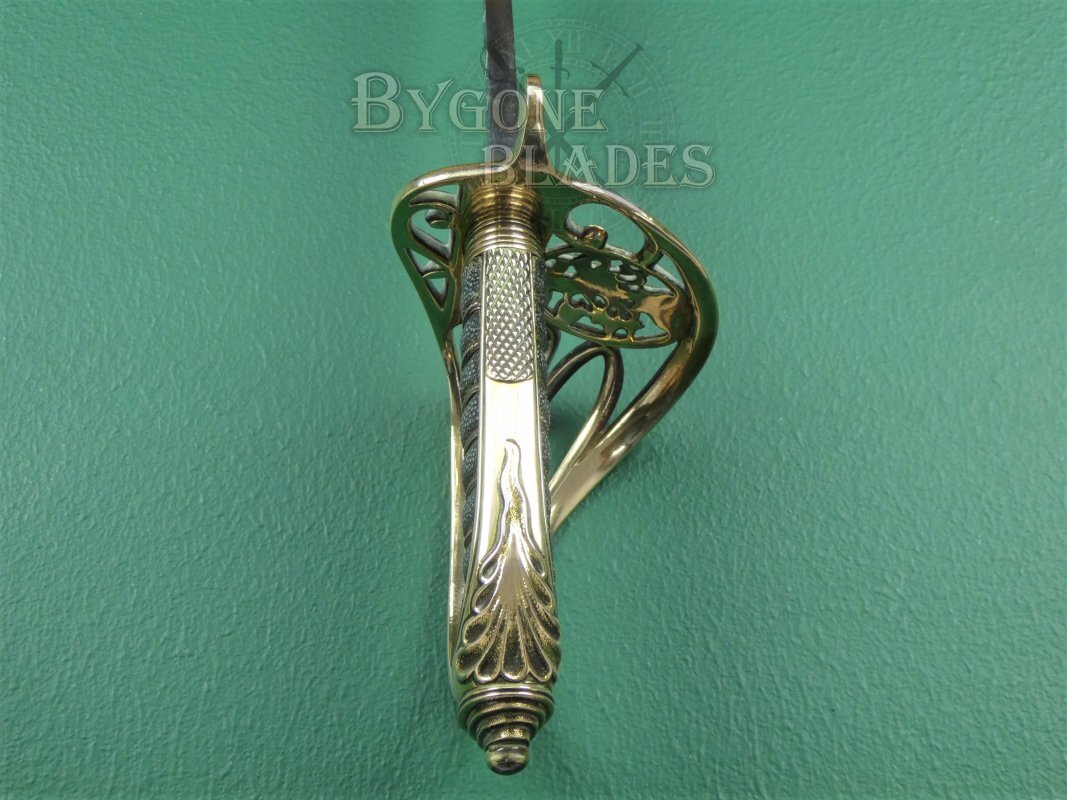
This is an excellent presentation example of a Victorian British 1845/54 pattern infantry Field officer’s sword made by Robert Mole of Birmingham in 1887. The sword was presented to Major George Gordon, an officer in Prince Alfred’s Guard, a British South African volunteer regiment based in Port Elizabeth.
Prince Alfred’s Guard’s first notable action was during the 9th Xhosa War. During the Battle of Umzintzani on 2nd December 1877, 70 men of the unit, under the command of the then Captain George Gordon fought off an attack by the Gcalekas, a sub-group of the Xhosa people of South Africa. The name of this battle is superimposed diagonally across a Zulu shield with crossed assegai and knobkerrie worn by the regiment as a collar badge since 1900.
During the Basuto War of 1880-81, Prince Alfred’s Guard stormed the Basuto chief, Lerotholi’s stronghold on 22nd October 1880 in the first ever bayonet charge by a volunteer unit in battle.
In 1888 Major Gordon became the commanding officer of the regiment.
The regiment again saw action in the Langeberg Campaign in Bechuanaland in 1897, and on 16th October 1899 the soldiers were mobilised for service in the Anglo-Boer War of 1899-1902, during which the regiment saw considerable action alongside the regular British forces.
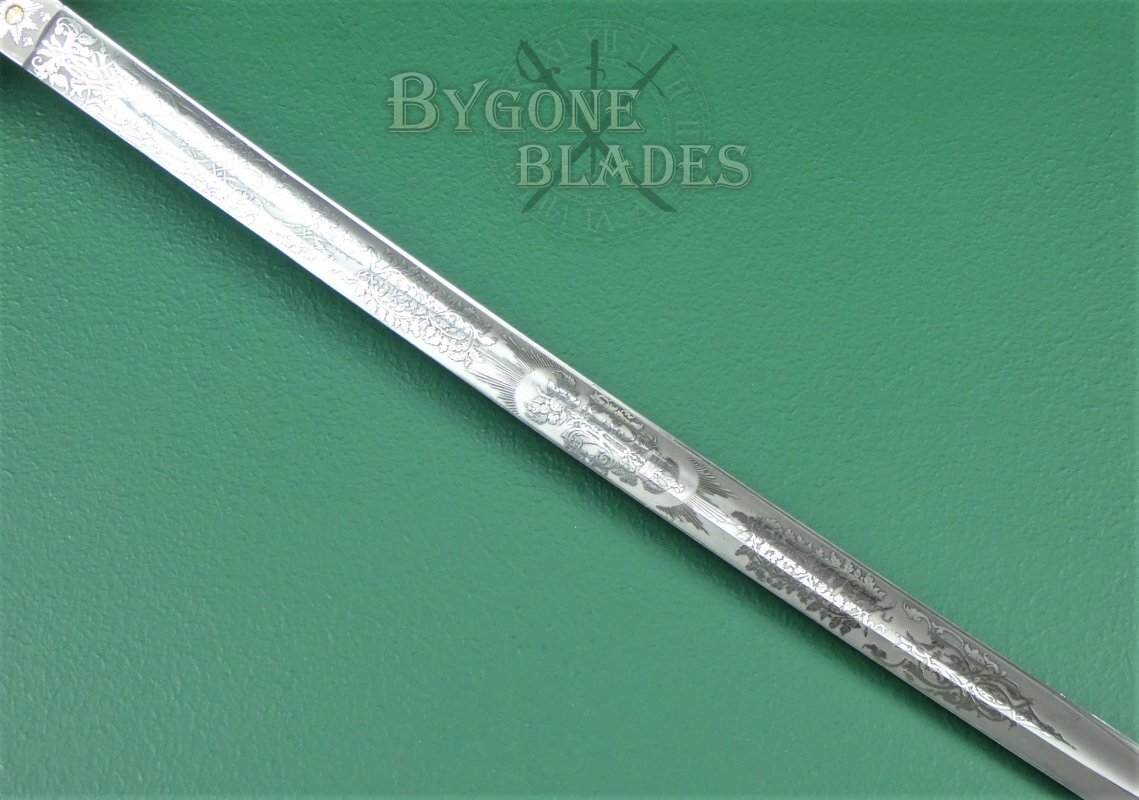
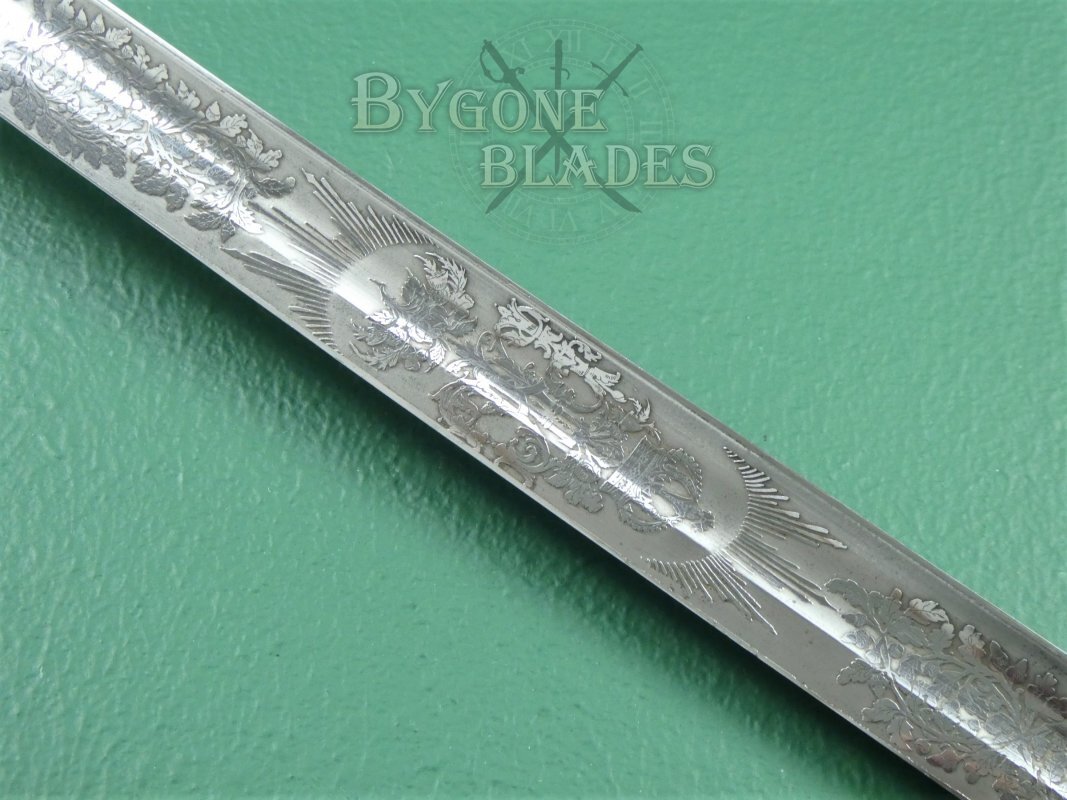
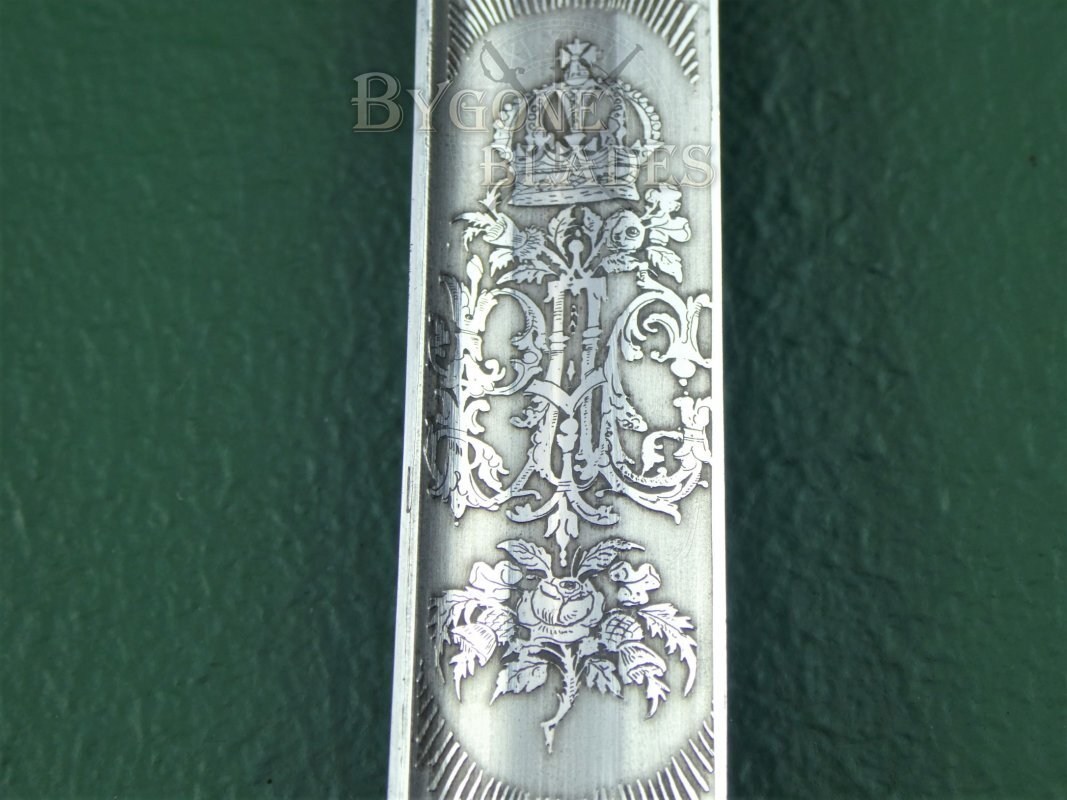
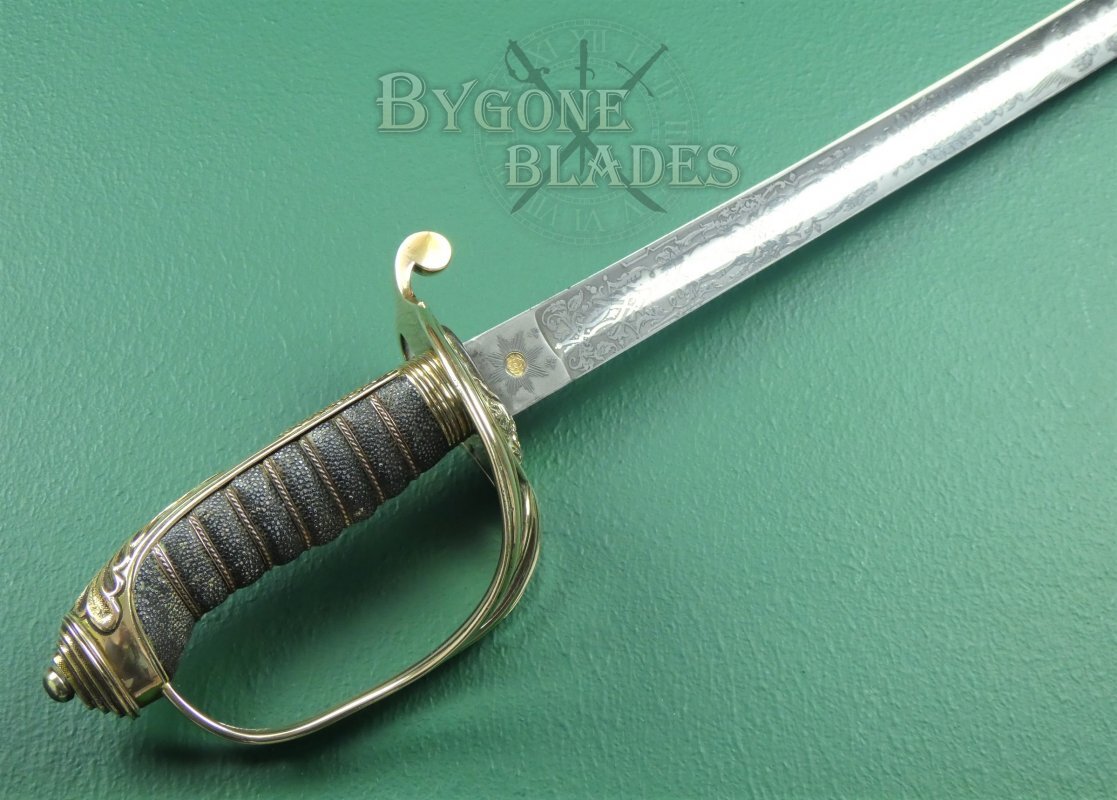
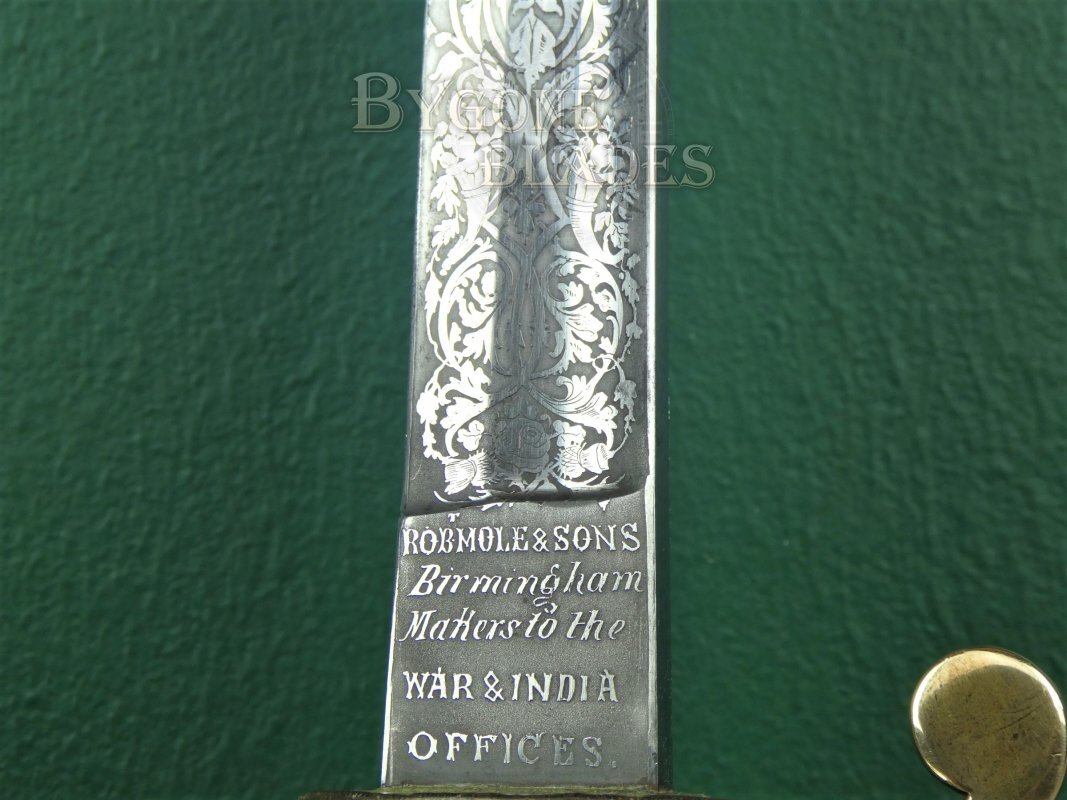
The 828mm 1845 “Wilkinson” pattern blade has a flat spine with a half-width fuller running for two-thirds of its length. The blade terminates in a spear point and is crisply etched with panels of ribboned scrollwork, oak leaves and acorns and the crowned cypher of the Prince Alfred’s Guard above the Flowers of the Union. The ricasso bears the gilt proof disk of Robert Mole.
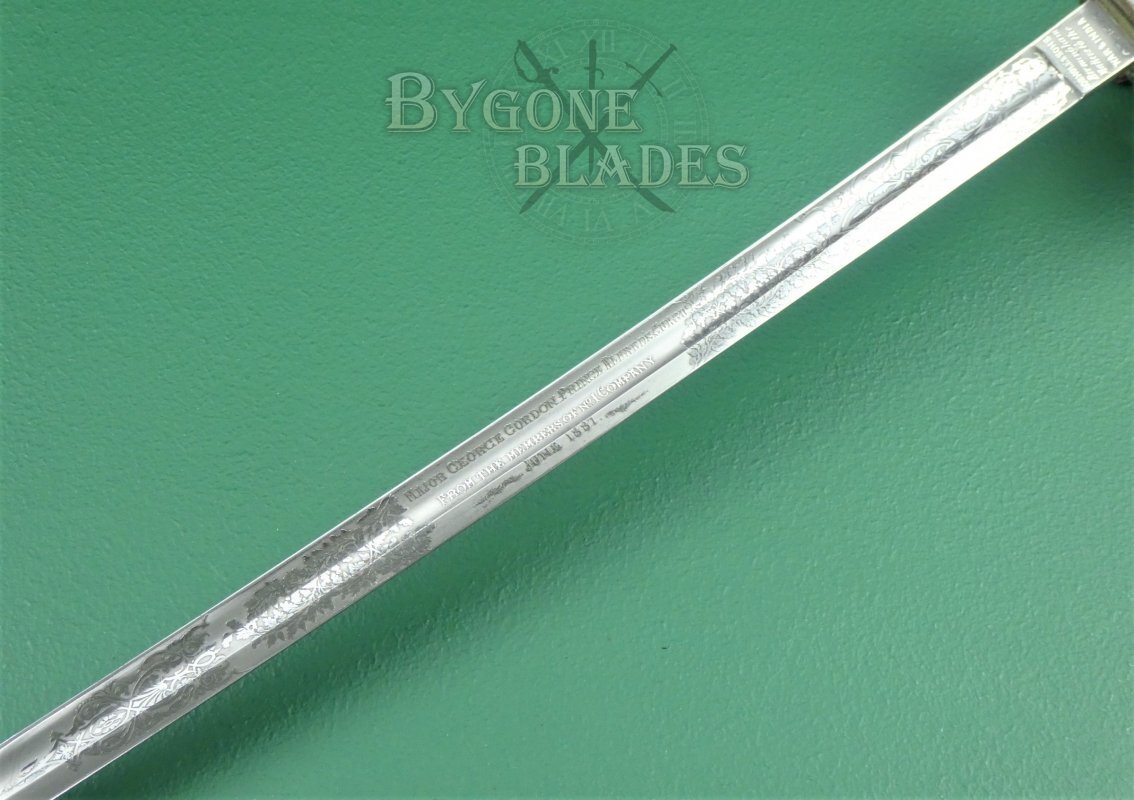
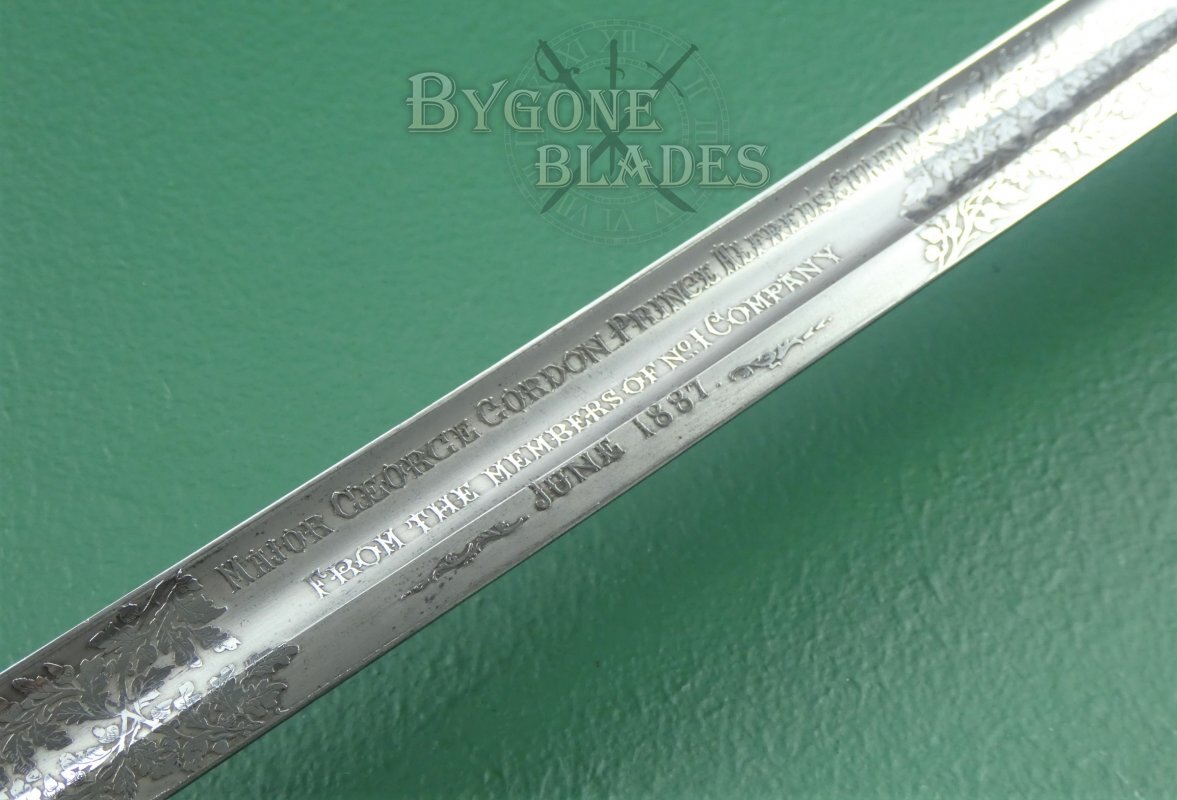
The obverse of the blade is similarly etched with oak leaves, acorns and ribboned scrollwork, with a presentation panel bearing the words;
“Major George Gordon, Prince Alfred’s Guard. From the members of No.1 company. June 1887.”
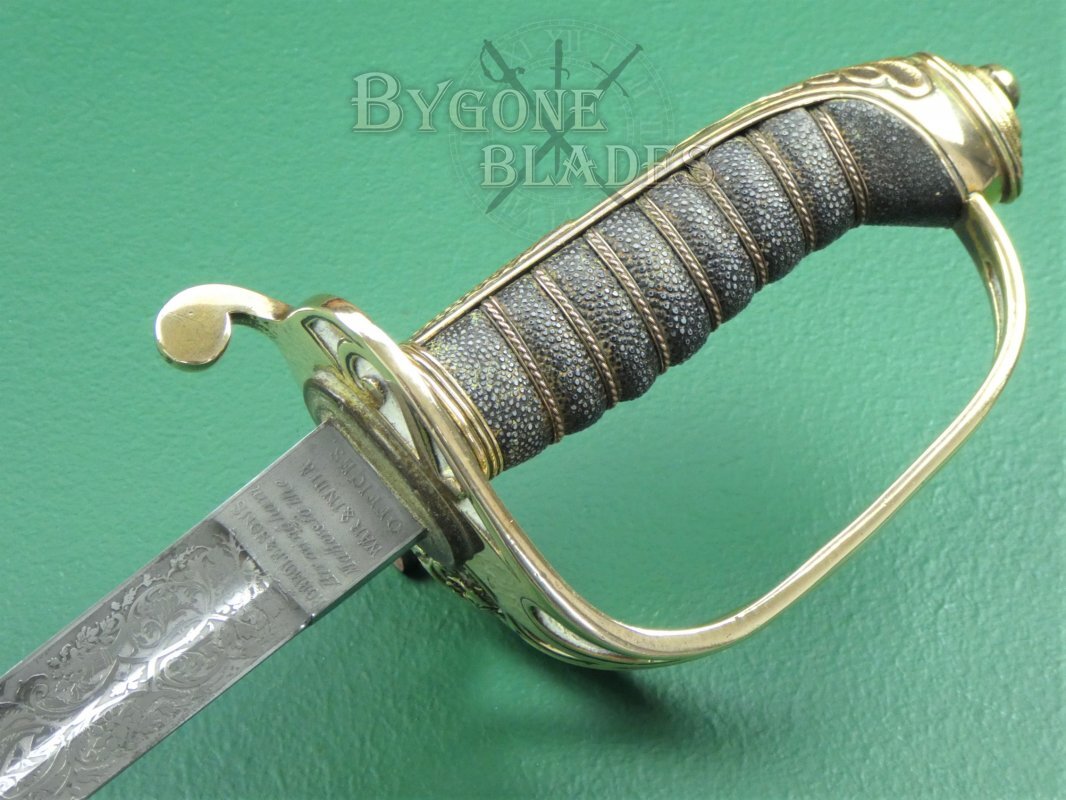
The ricasso bears the maker’s details, “RobT Mole & Sons, Birmingham. Makers to the War & India Offices.”
The blade is in excellent, near mint condition with only a couple of small spots of discolouration to the polished steel of the point. The blade retains its original washer and is firm in the hilt.
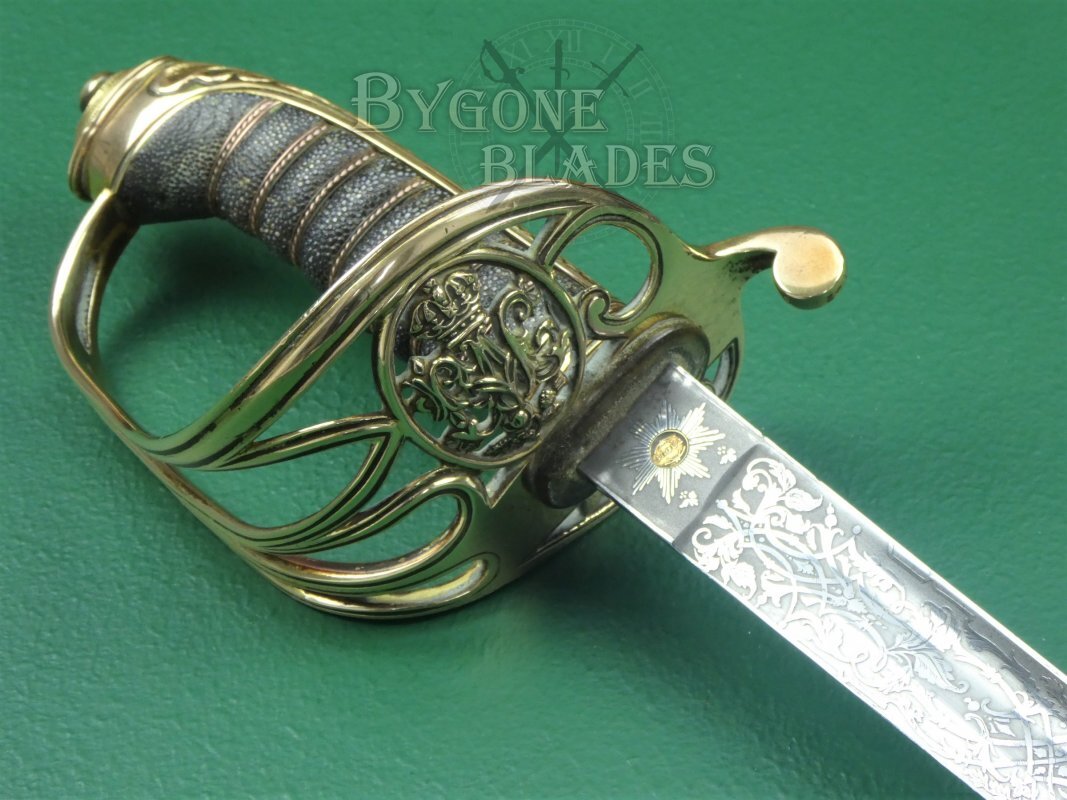
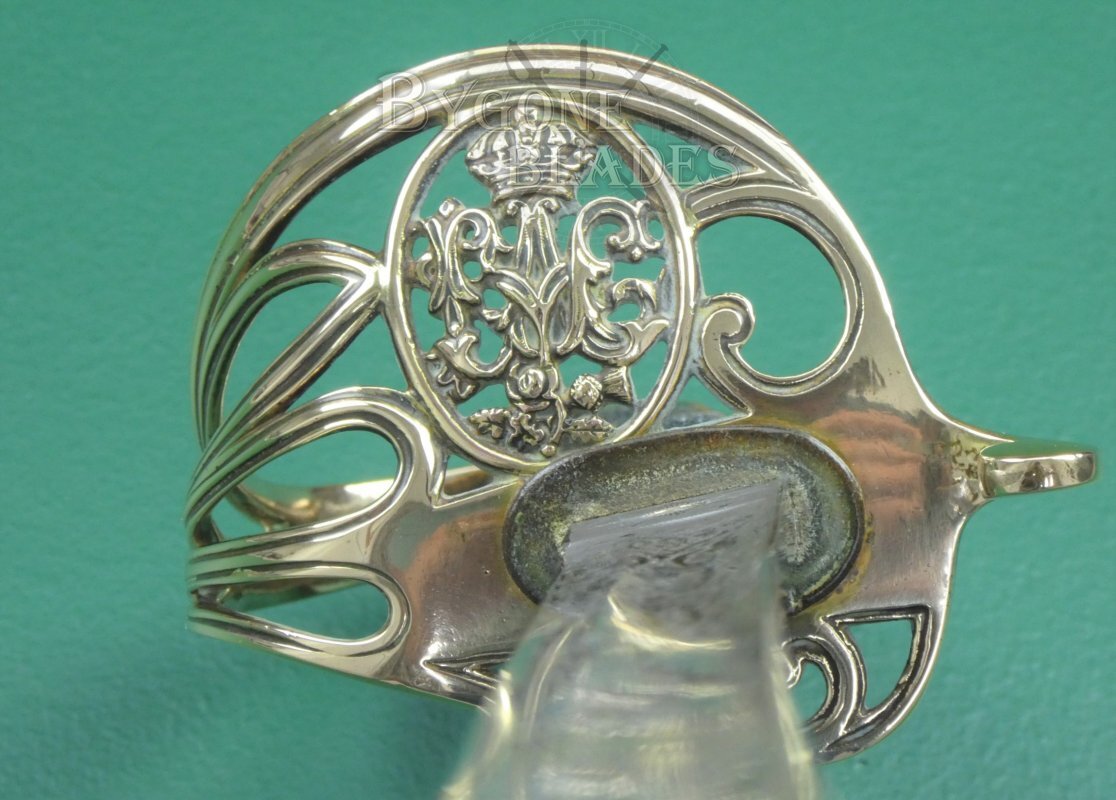
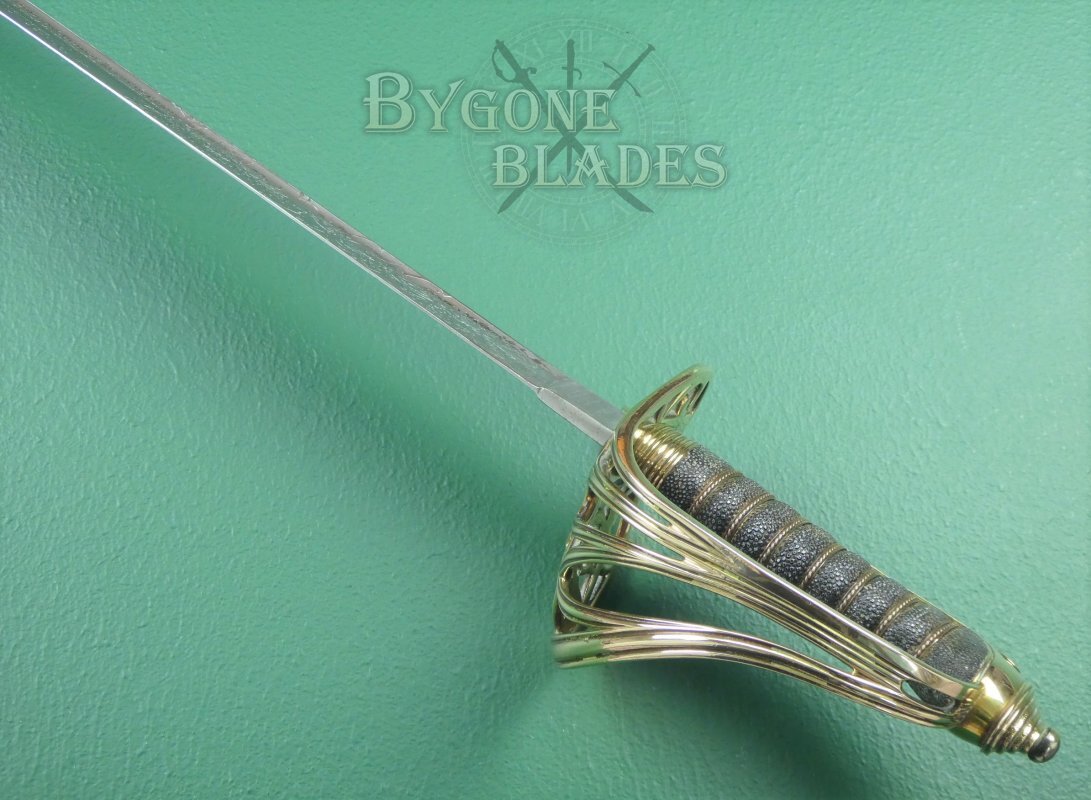
The Gothic 1854 pattern guard is in great condition and retains its gilding. An oval within the guard bears the badge of the Prince Alfred’s Guard above the Flowers of the Union. The shagreen wrapped grip is in excellent condition and the twisted copper wire is intact and tight.
The sword is complete with its heavy duty field officer’s gilt brass scabbard with twin suspension rings. The scabbard is in good condition and retains its gilding. The scabbard has numerous small dings consistent with service wear and use. The sword sheathes and draws smoothly and is held firmly within the scabbard.
This is a very fine example of a named field officer’s sword by one of Victorian England’s top makers. George Gordon retired as a Lieutenant Colonel. Lt. Col. Gordon distinguished himself in battle during a pivotal period of Anglo-South African history.