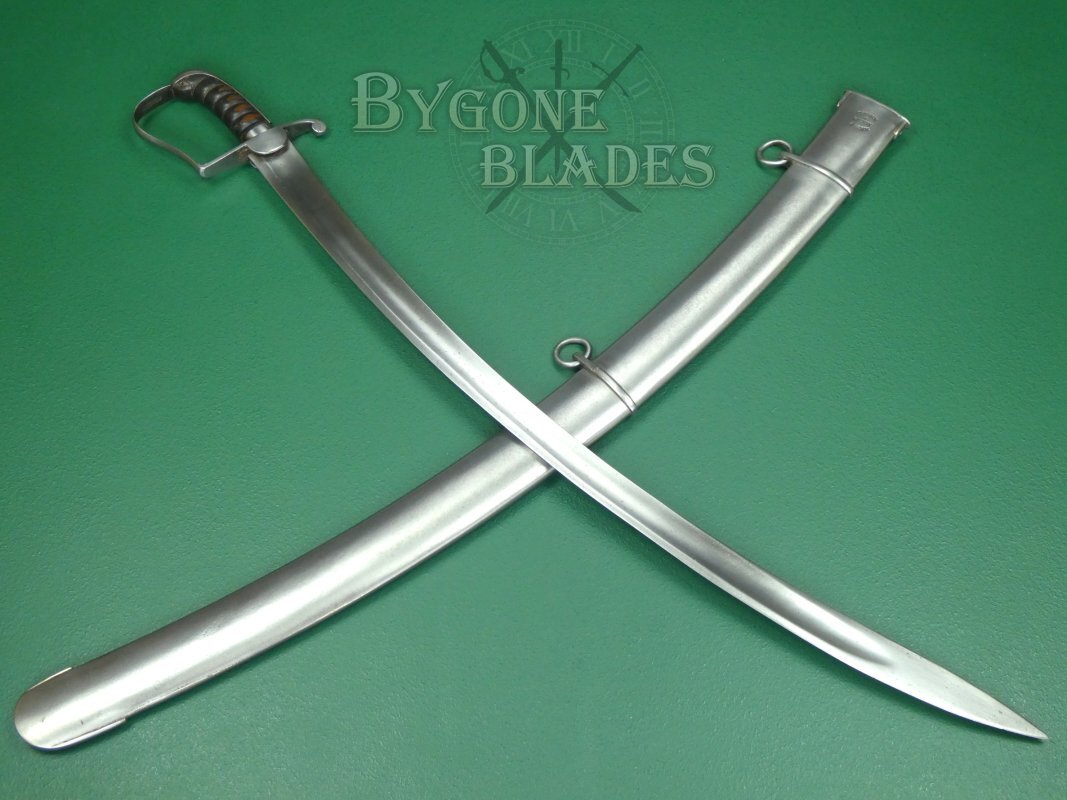
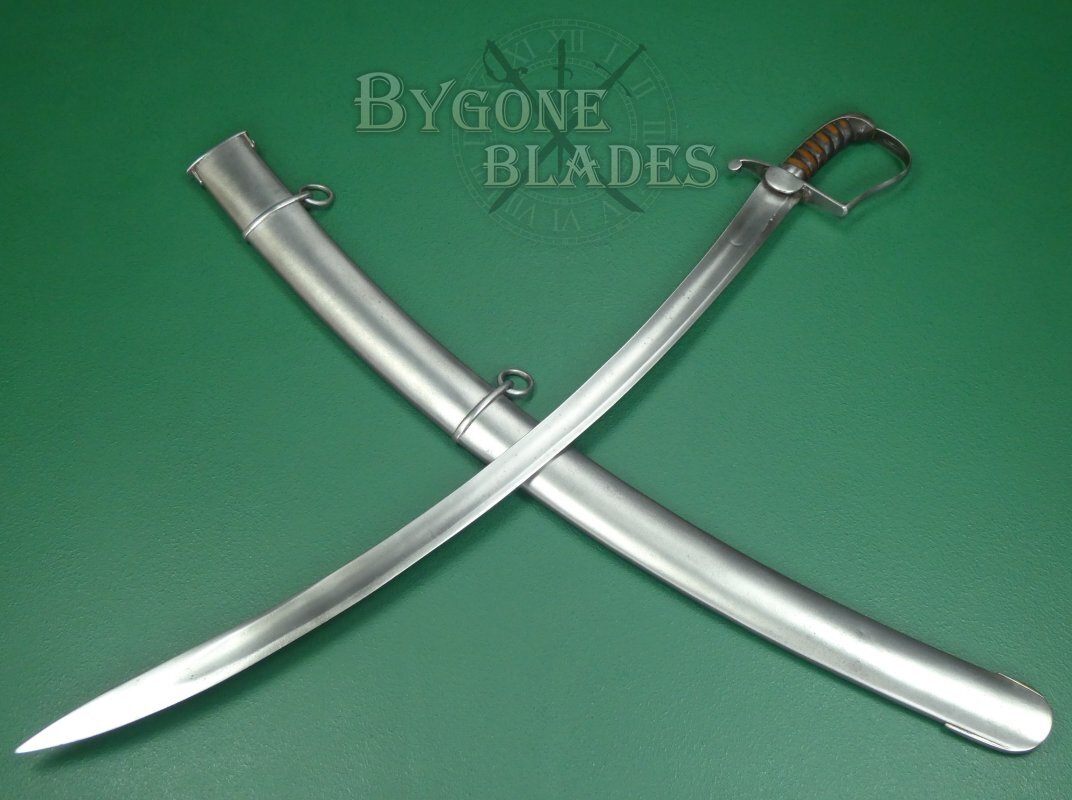
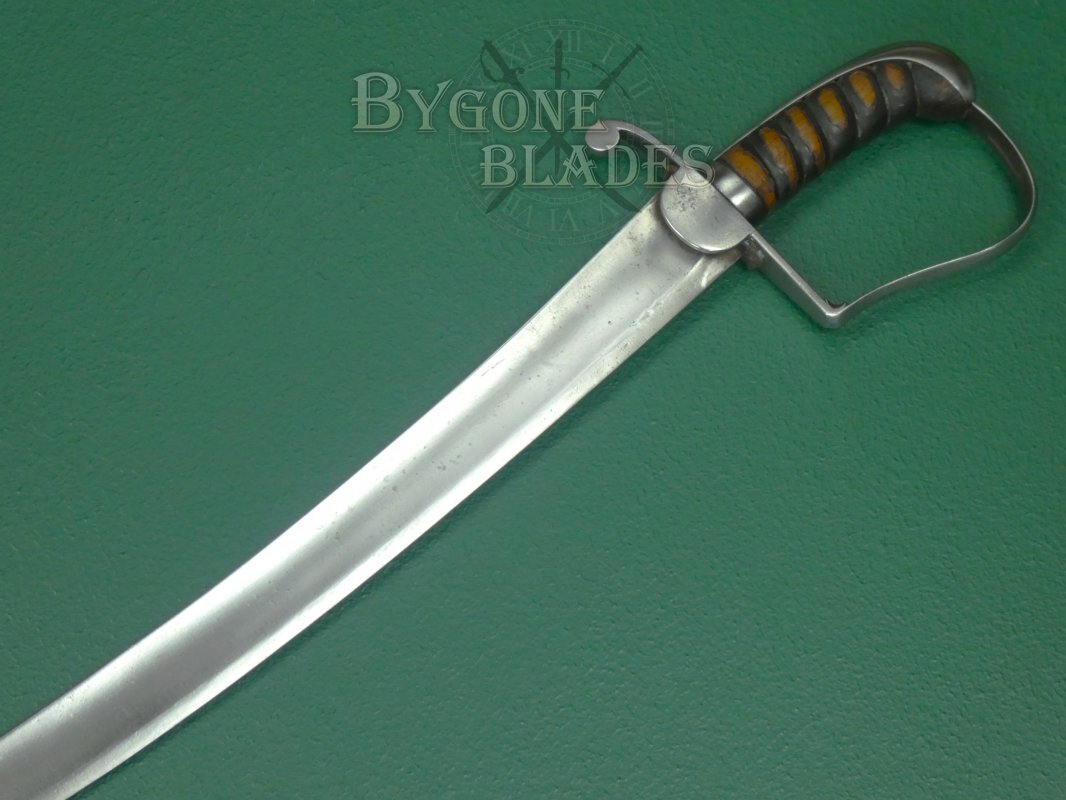
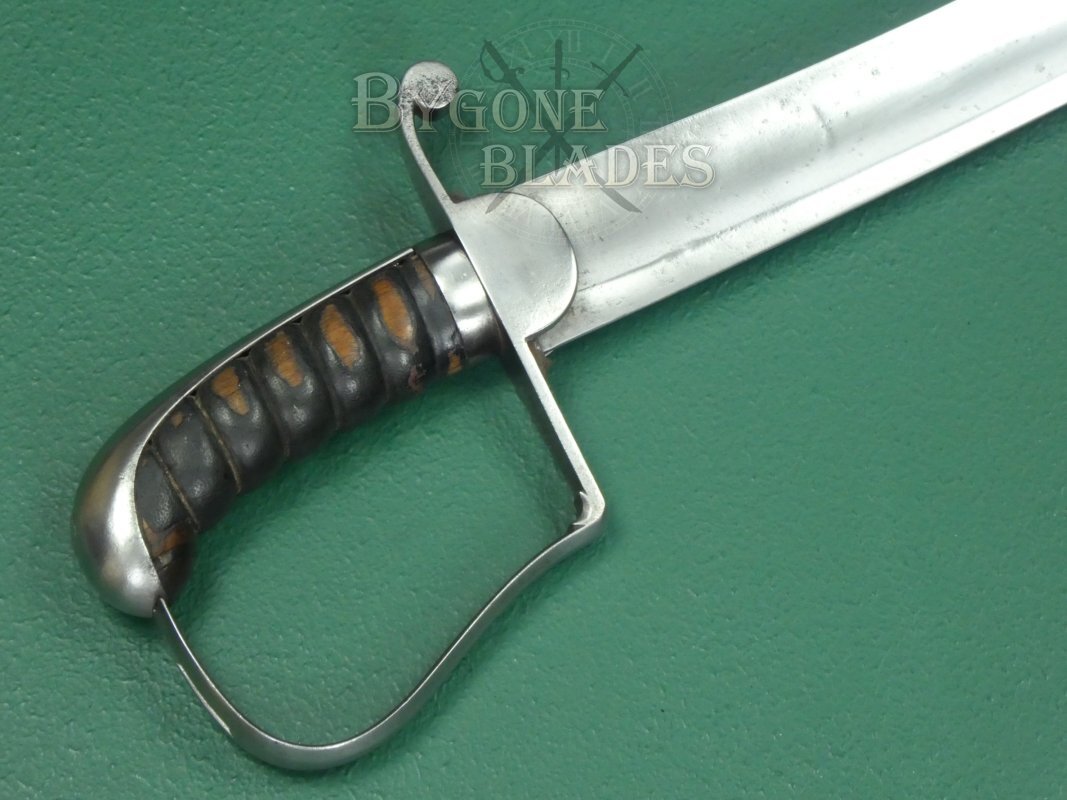
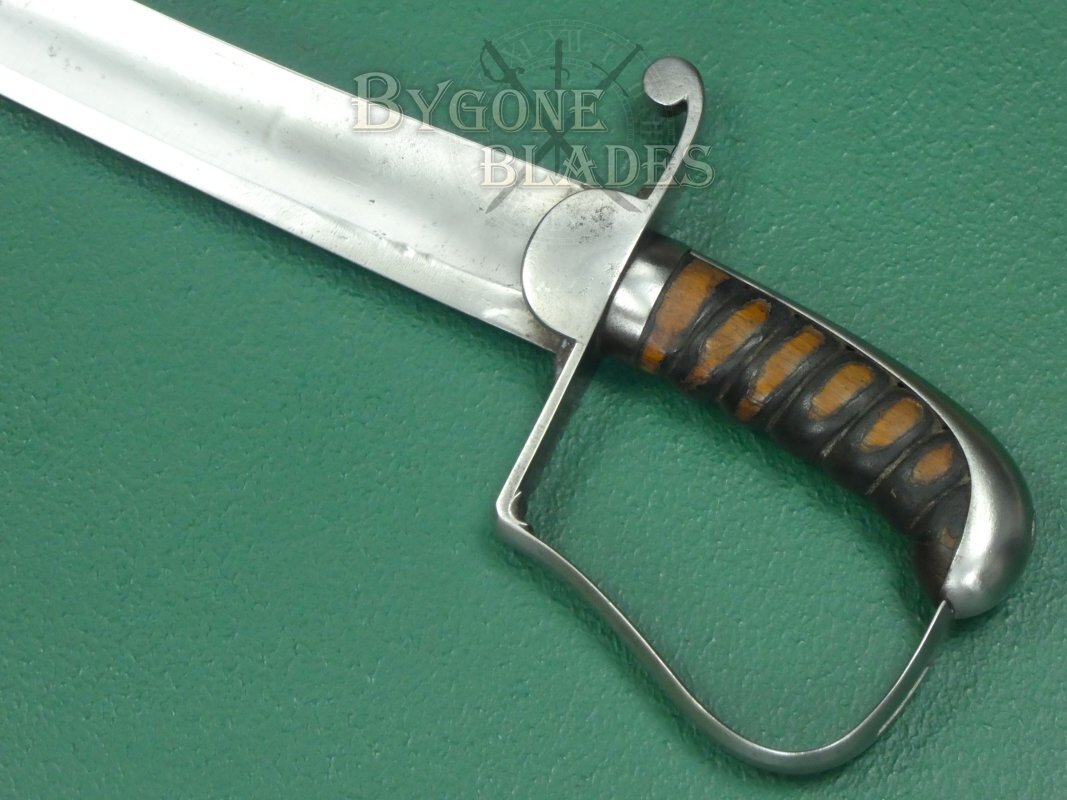
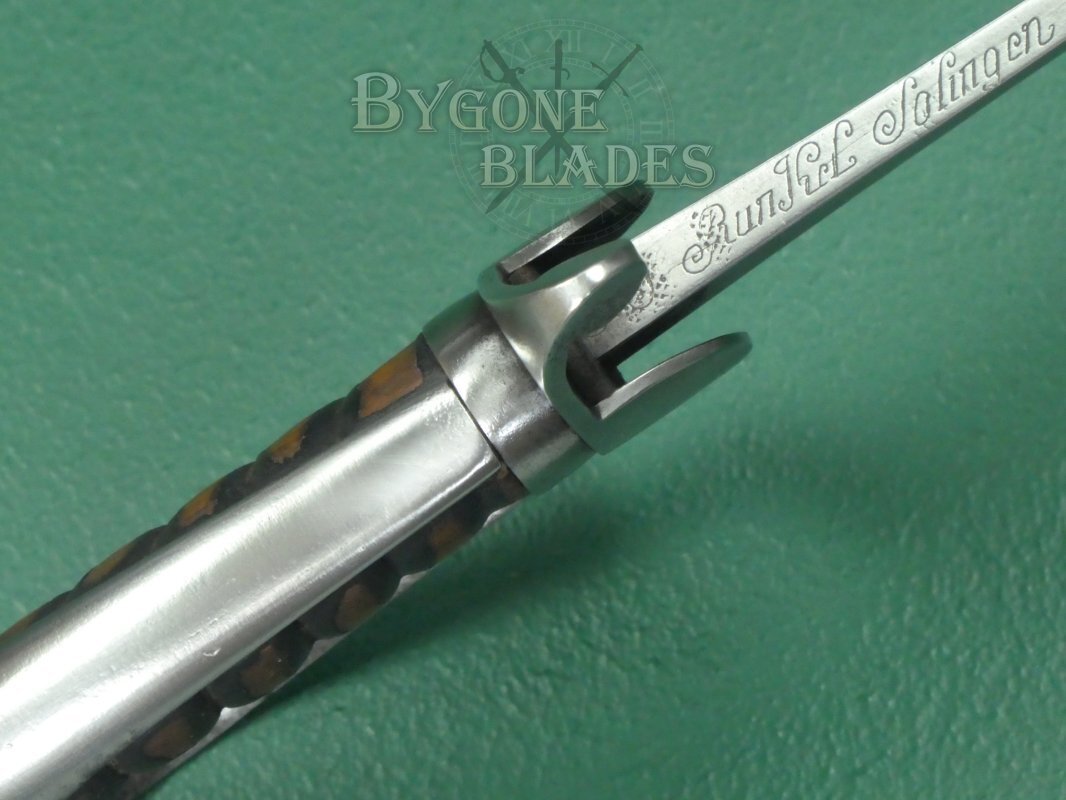
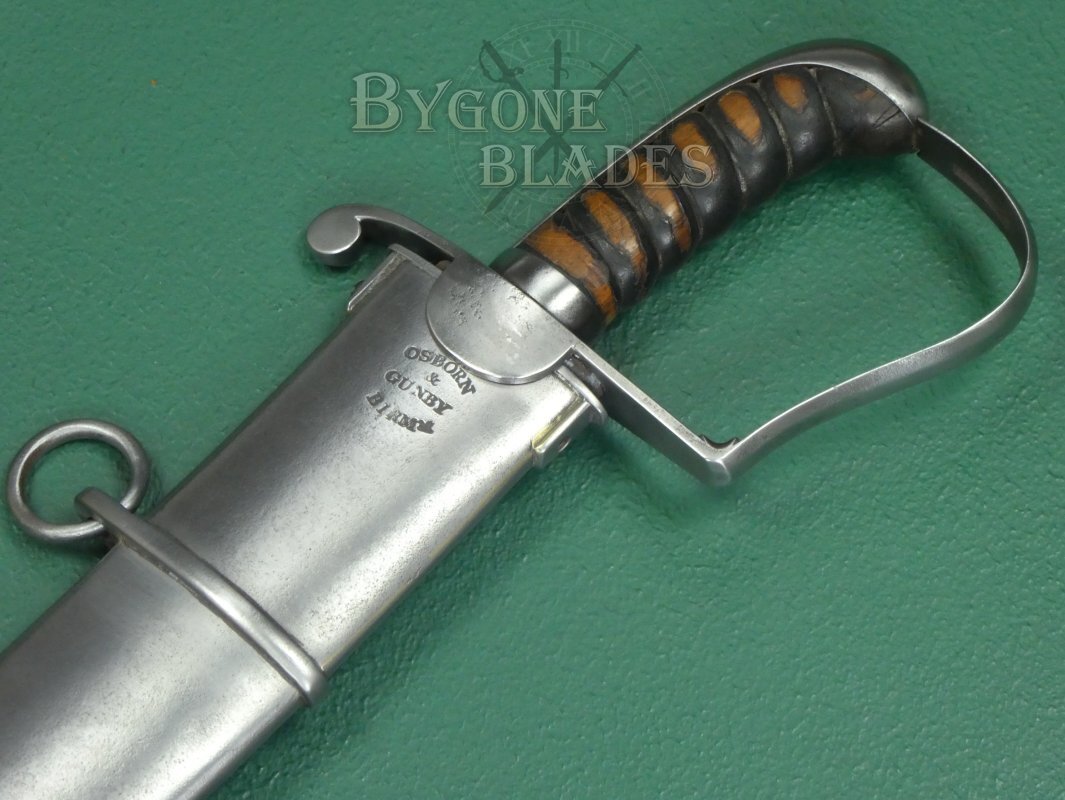
This Georgian 1796 Light Cavalry Officer’s Sabre was imported from Solingen by J. J. Runkel between 1796 and 1805. The Neef family of Solingen bladesmiths were his primary supplier until Napoleon conquered the Rhineland in 1806.
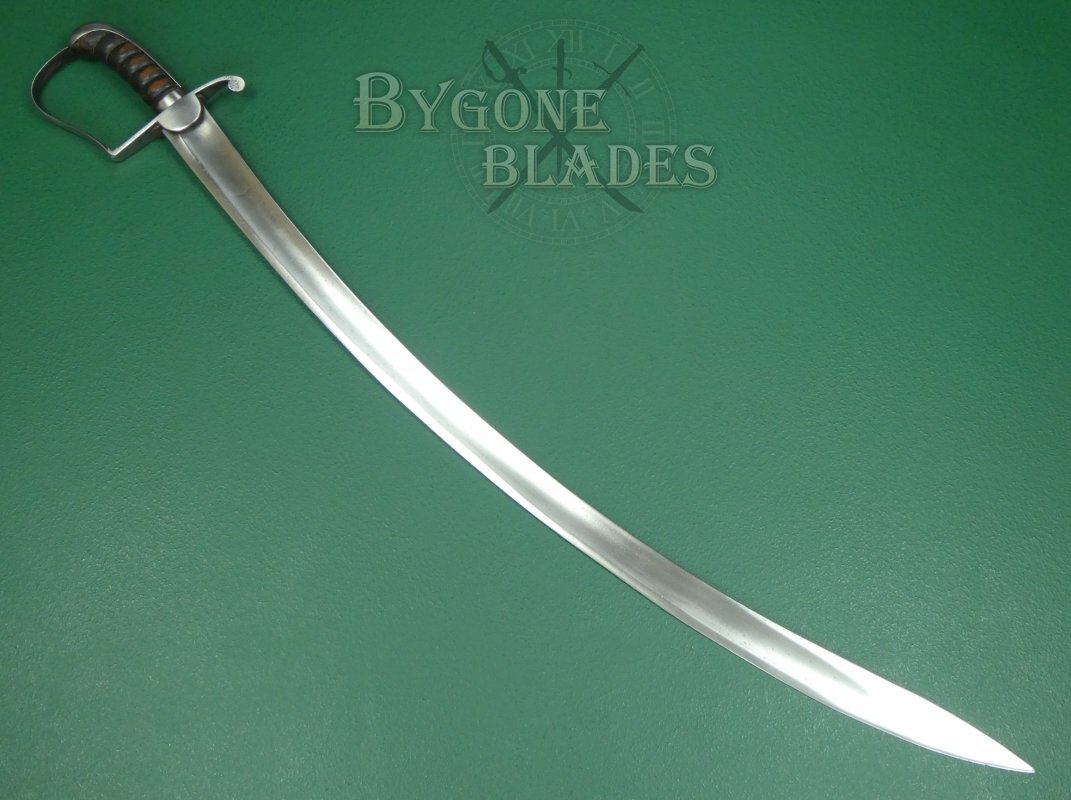
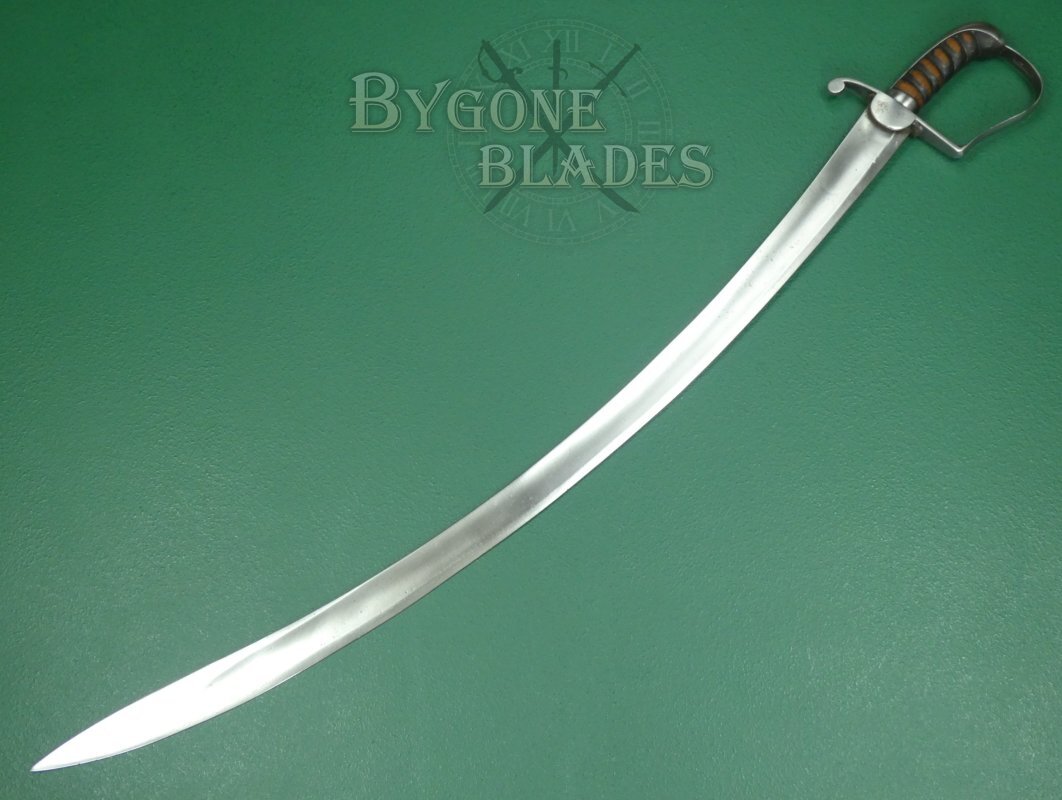
The 805mm curved blade has a flat spine above a wide, shallow fuller and terminates in a spear point. The re-profiling of the point is an uncommon modification that greatly improves the swords’ penetration while retaining its cutting/slashing ability. Many 1796 heavy cavalry swords had their points re-profiled to spear points prior to the Battle of Waterloo in 1815. It is possible that this swords’ modification occurred around this time.
The spine bears the Runkel name, identifying him as the importer (Runkel was an importer, not maker of swords). The blade is un-etched and retains a fighting edge with a couple of very small nicks. Clearly this sword was intended for fighting as opposed to wearing for show. The officer probably had a second sabre with blue and gilt or etching to be worn for dress occasions.
The blade is in very good condition.
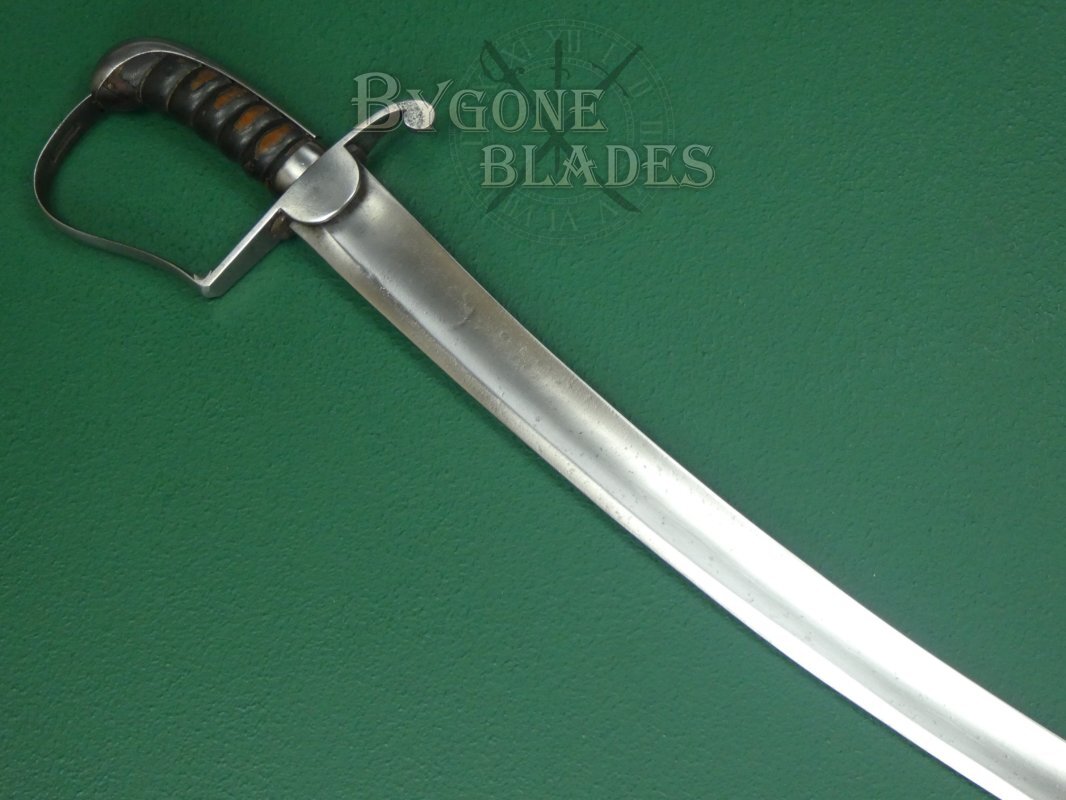
The stirrup hilt has a plain back strap and ferrule with a faceted knuckle bow. The steel is bright and in good condition with a small patch of shallow pitting on the quillon. The leather wrapped grip has fantastic use-related wear, testament to years of handling. The blade is firm in the hilt.
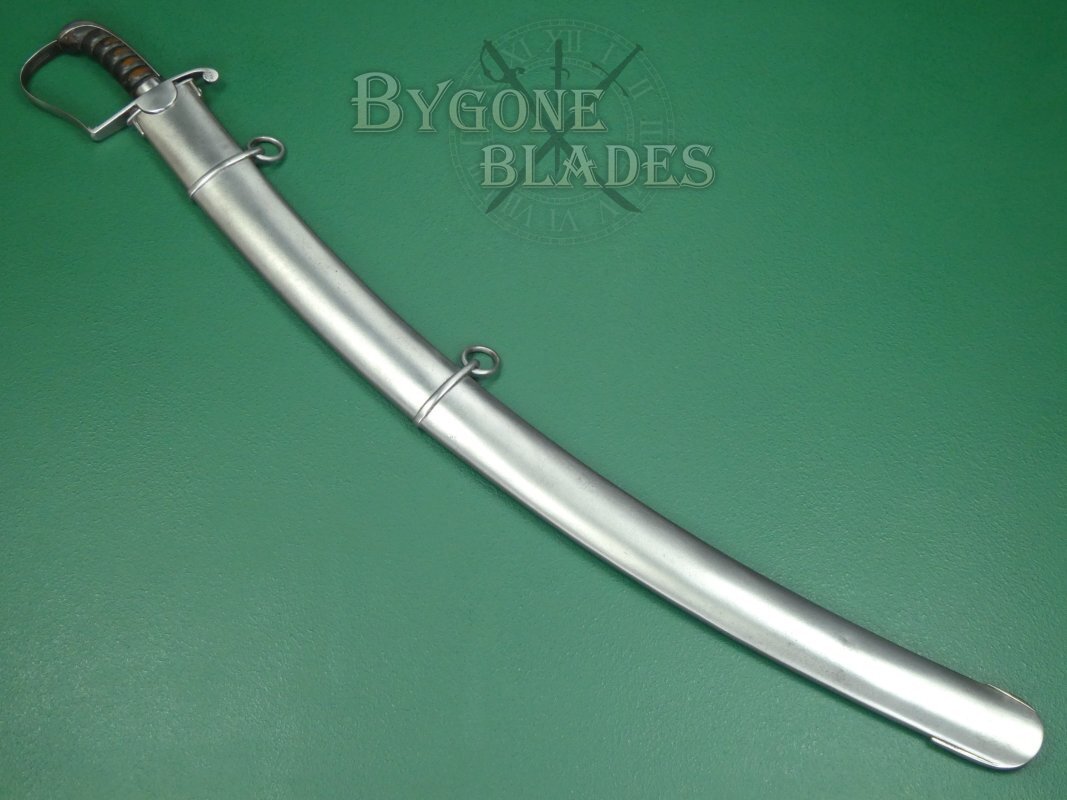
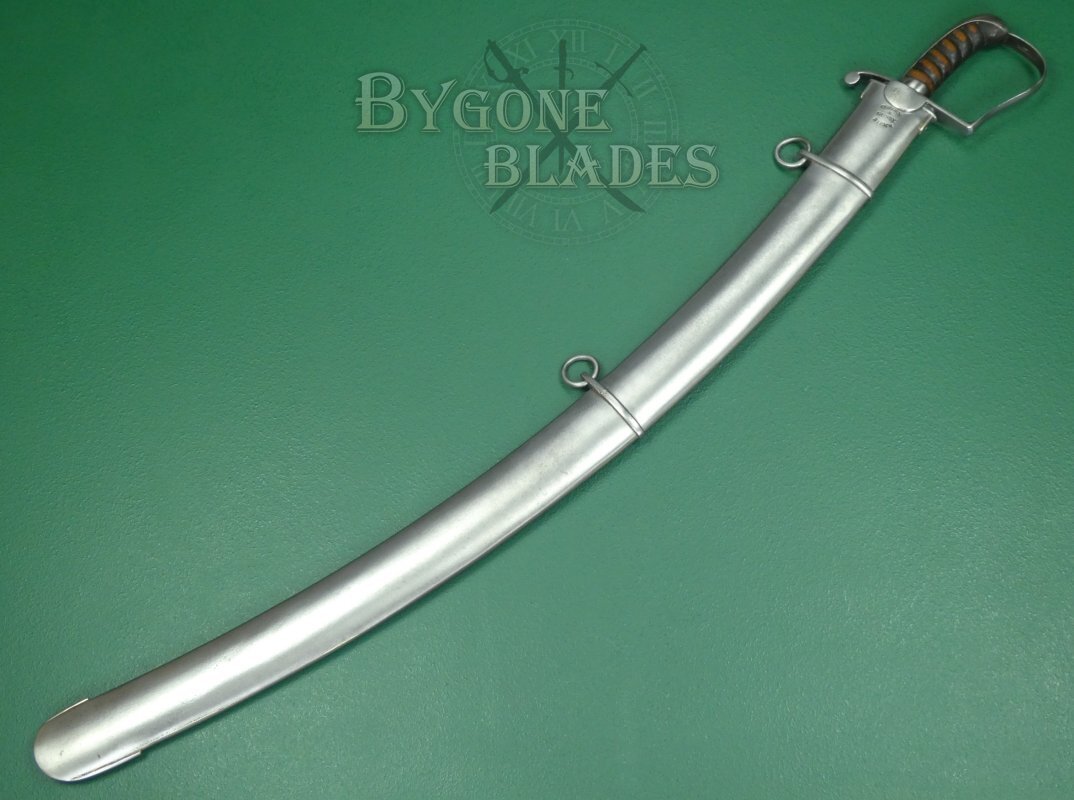
The sabre is complete with its steel scabbard, which is in excellent condition. The scabbard was made by Osborn & Gunby of Birmingham and is clearly stamped with their details. This scabbard is likely a replacement for the swords’ original scabbard which was either lost or damaged. The scabbard is a perfect fit and retains its wooden lining. The sword sheaths and draws smoothly and is held firmly within the scabbard.
This is a great example of a Napoleonic Wars period light cavalry officers’ fighting sabre with a rare spear point.