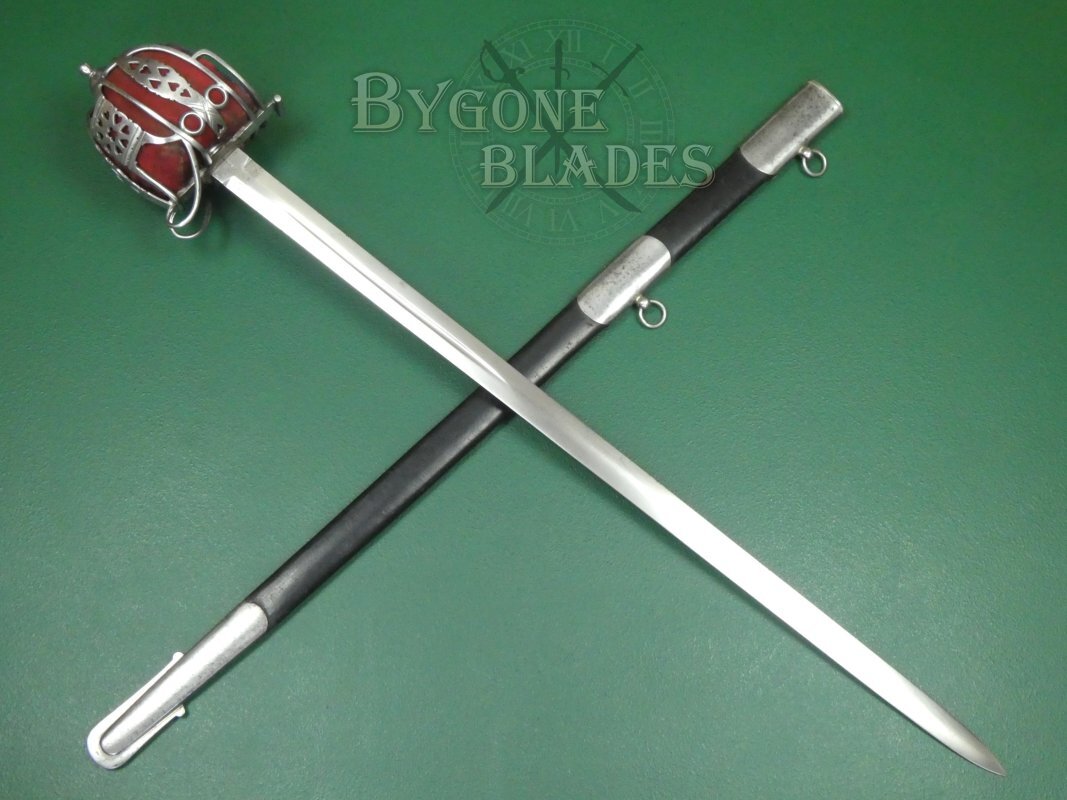
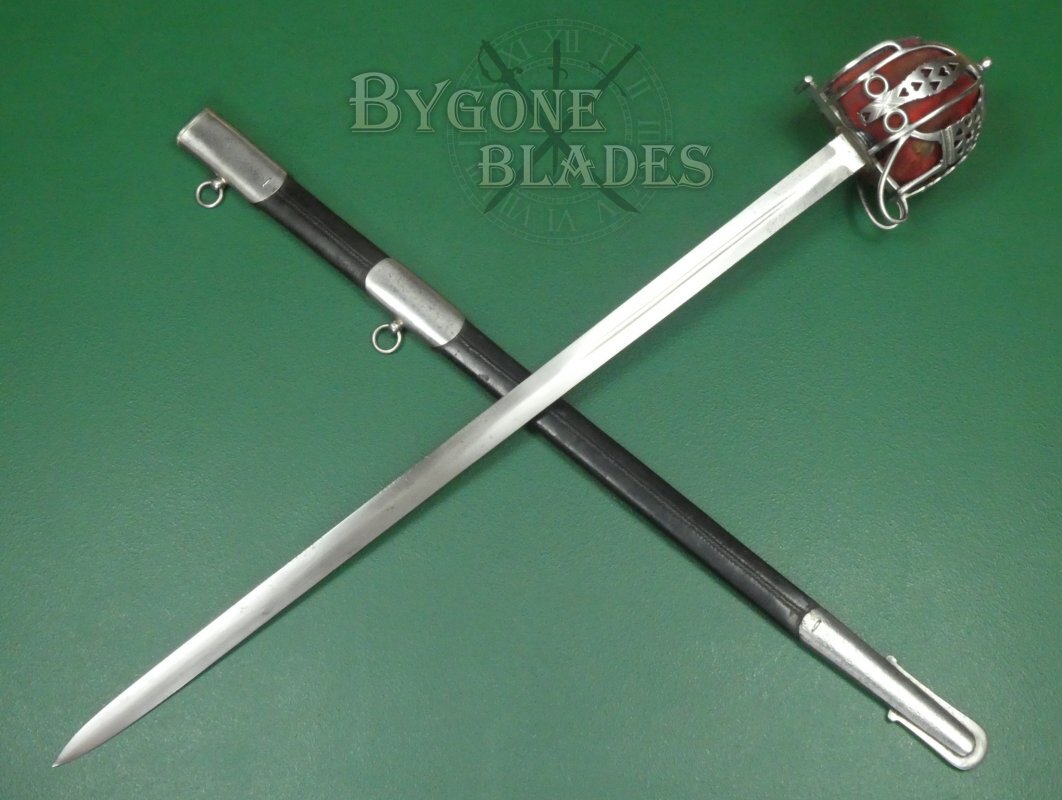
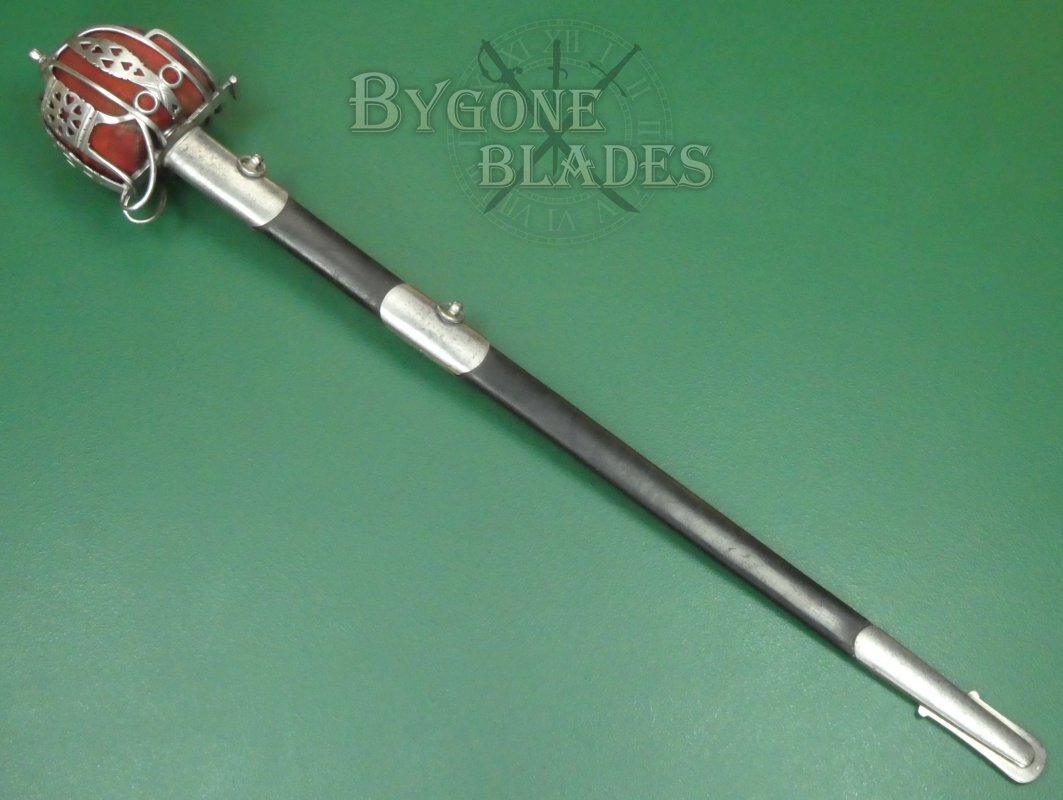
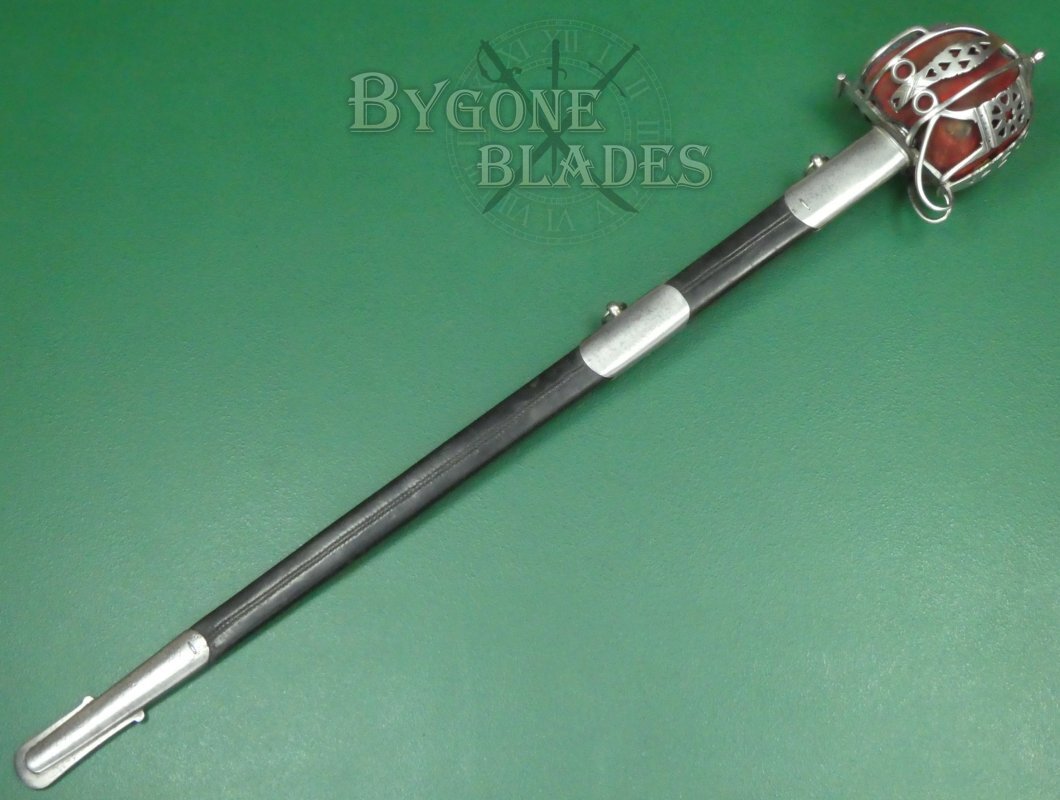
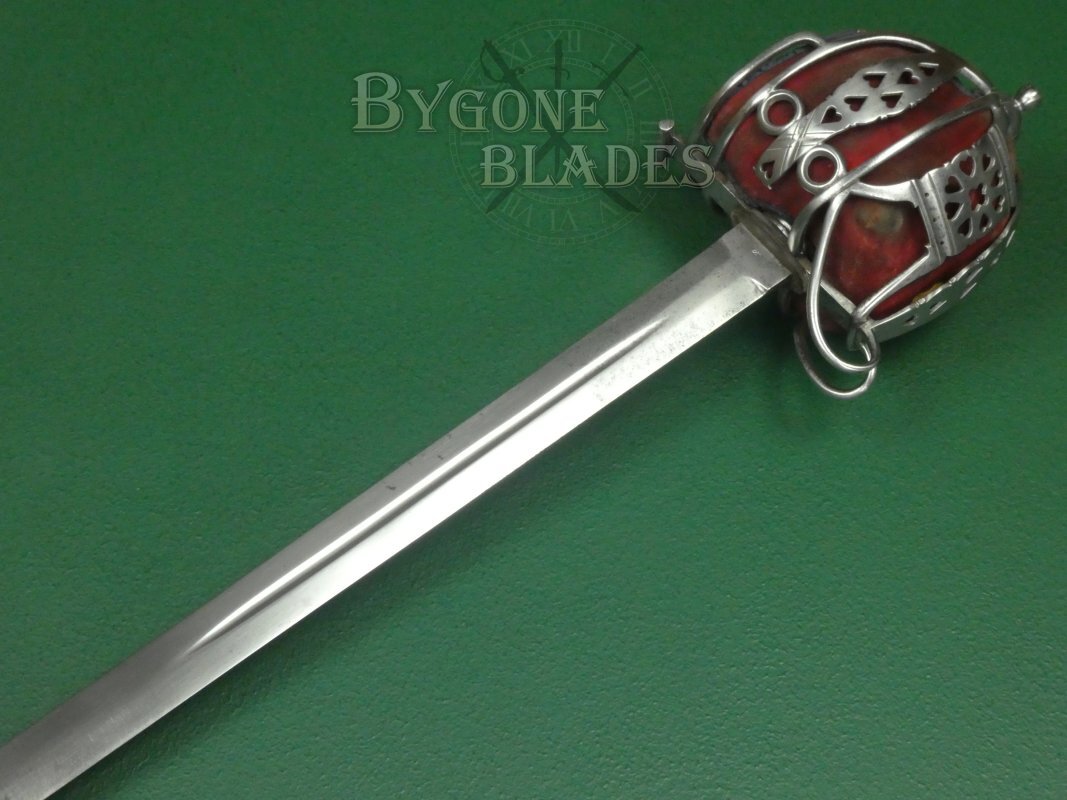
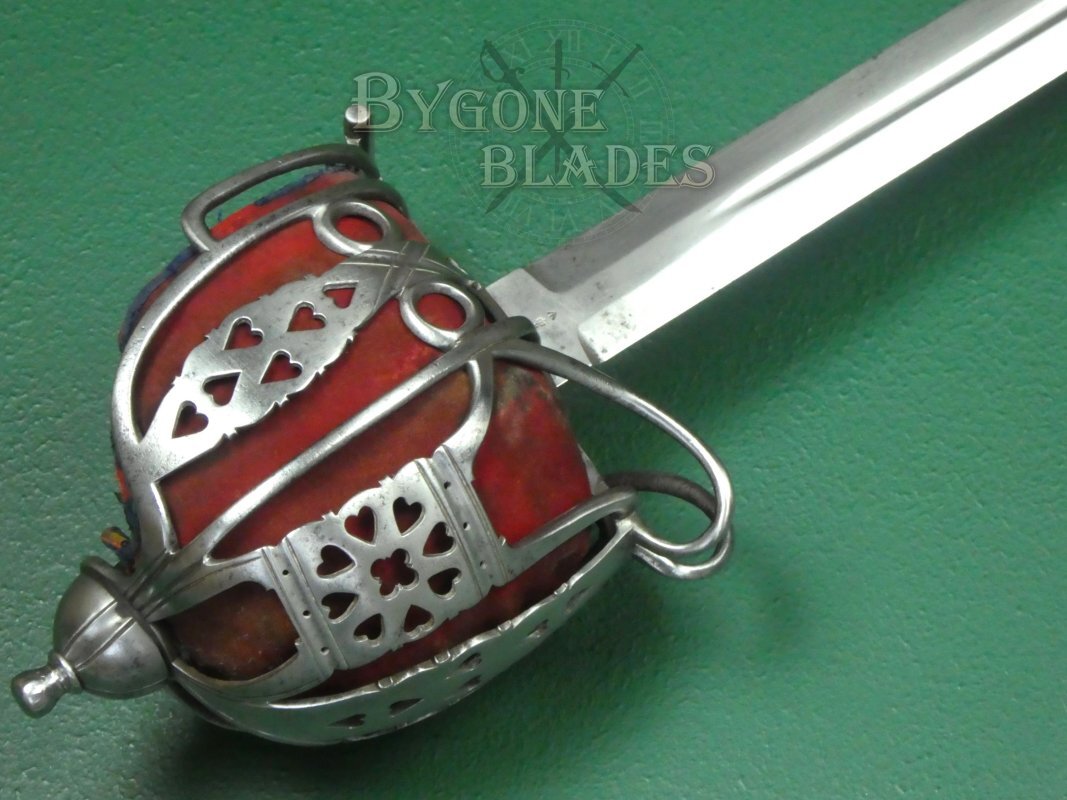
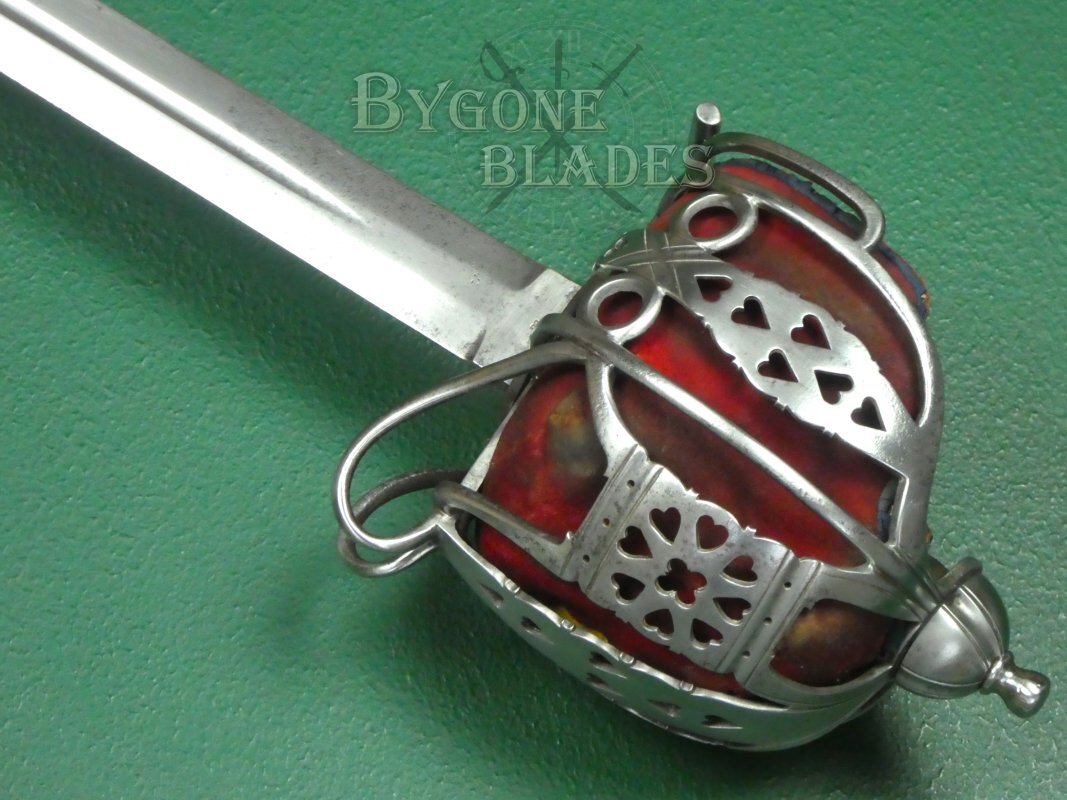
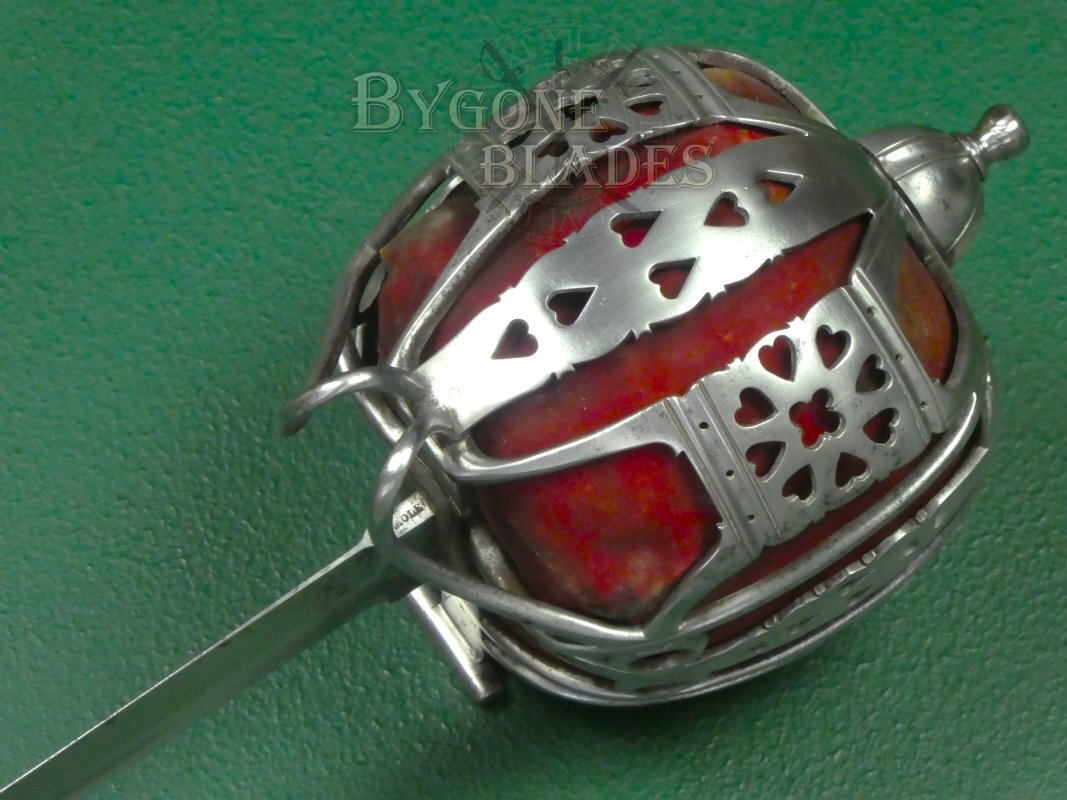
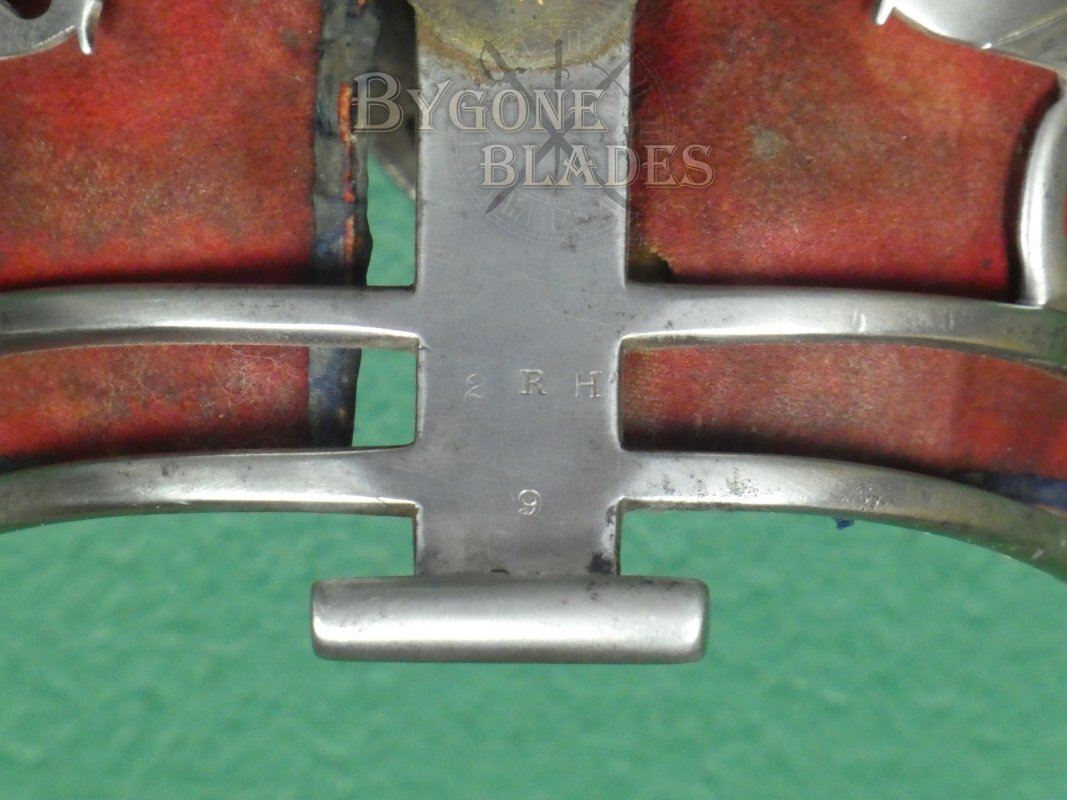
This Victorian Black Watch staff-sergeant's Mk II broadsword was made by Robert Mole. The basket's quillon is stamped with the regimental designation of The Black Watch (Royal Highlanders).
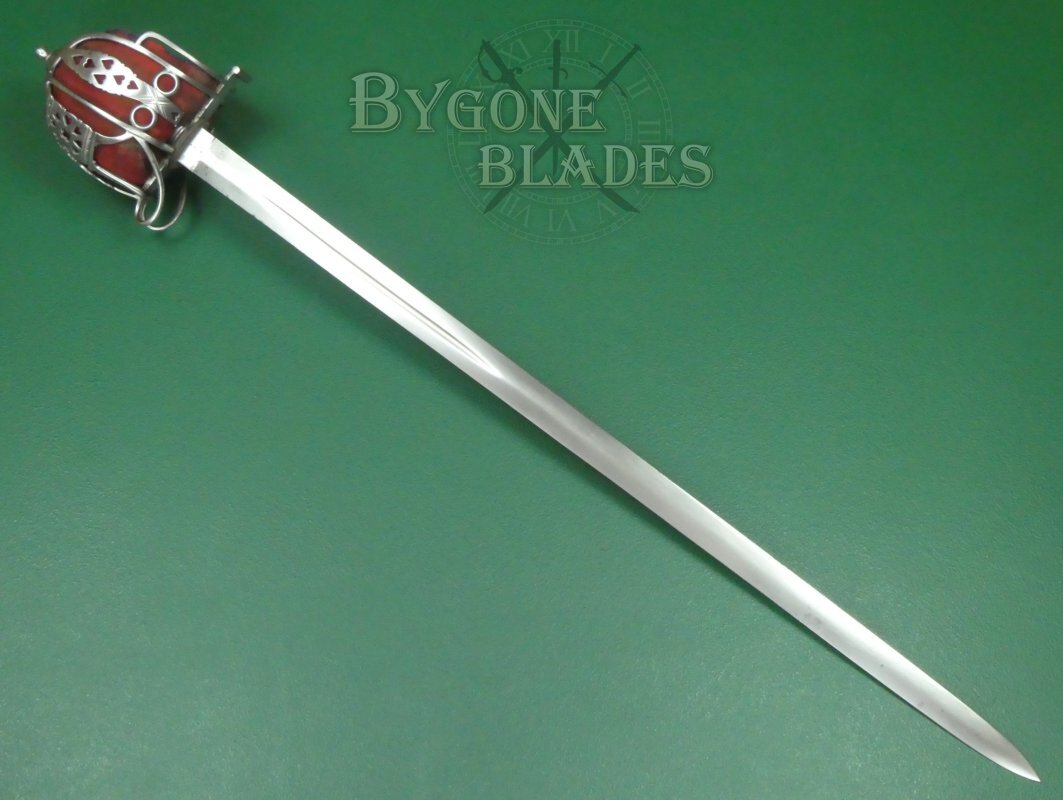
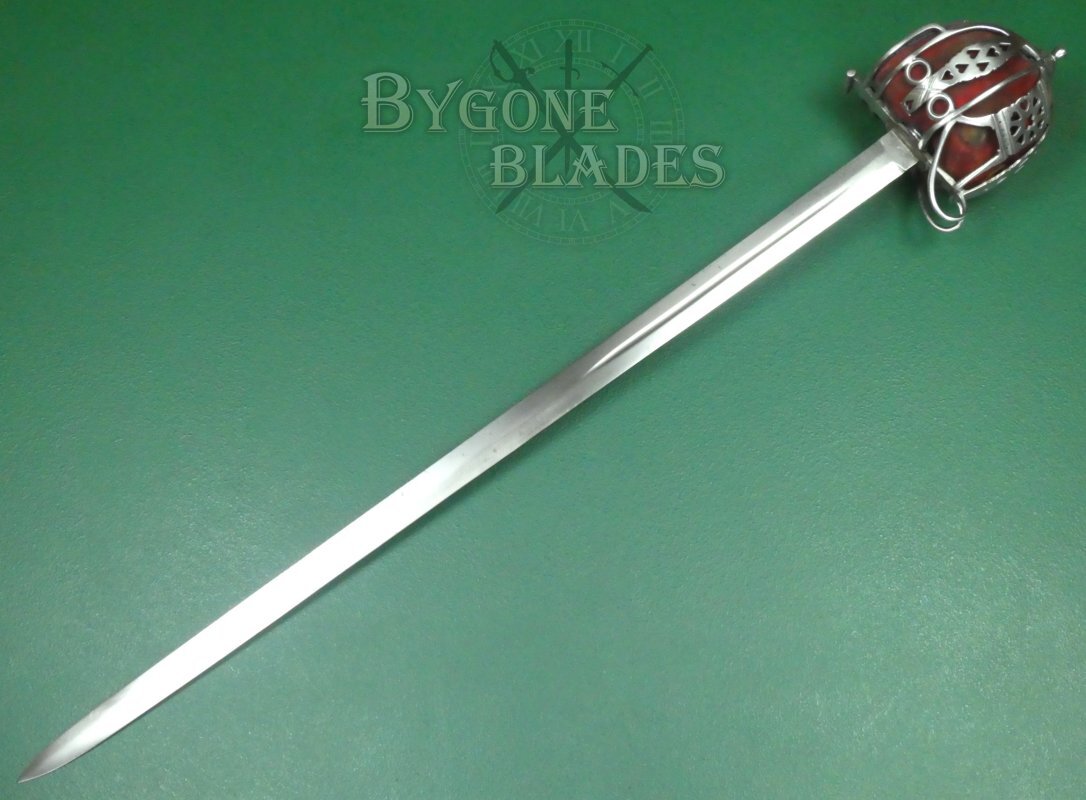
The 825mm double-edged (broadsword) blade is 34mm wide at the ricasso. The blade has a short central fuller beginning at the forte and terminates in a spear point. The blade retains its service sharpened edges. From January 1898, the War Department required that staff-sergeants’ swords be sharpened to a thickness of 0.01 inches in the factory, and that additional sharpening be carried out regimentally when on active service. It is likely that this sword was sharpened for service in the Second Anglo-Boer War (1899-1902). The 2nd Battalion of the Black Watch arrived in South Africa on the 13th November 1899 and played a significant role in the fighting.
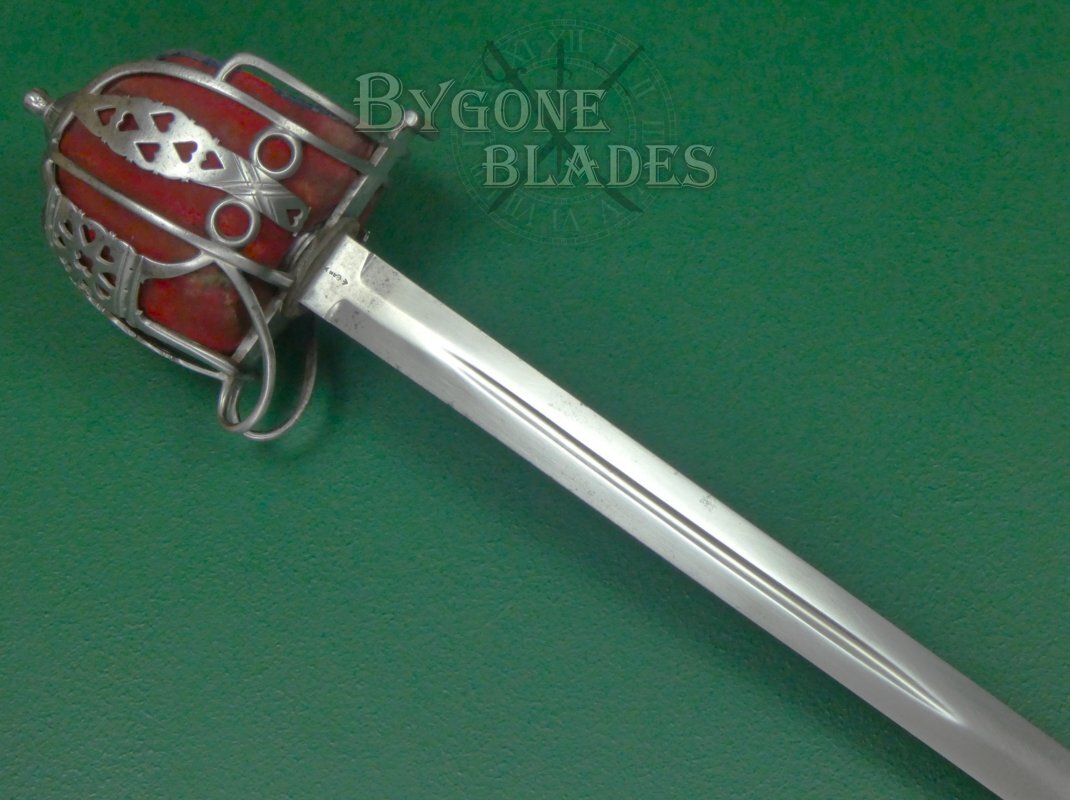
The blade is in great condition with very minor and scattered spots of tarnish. The ricasso is stamped with a Broad Arrow, a Birmingham factory inspection mark and a bend test X. The obverse ricasso bears the date 1897. The spine of the ricasso is stamped with the makers’ name, MOLE. The obverse of the ricasso spine bears a crowned inspection stamp.
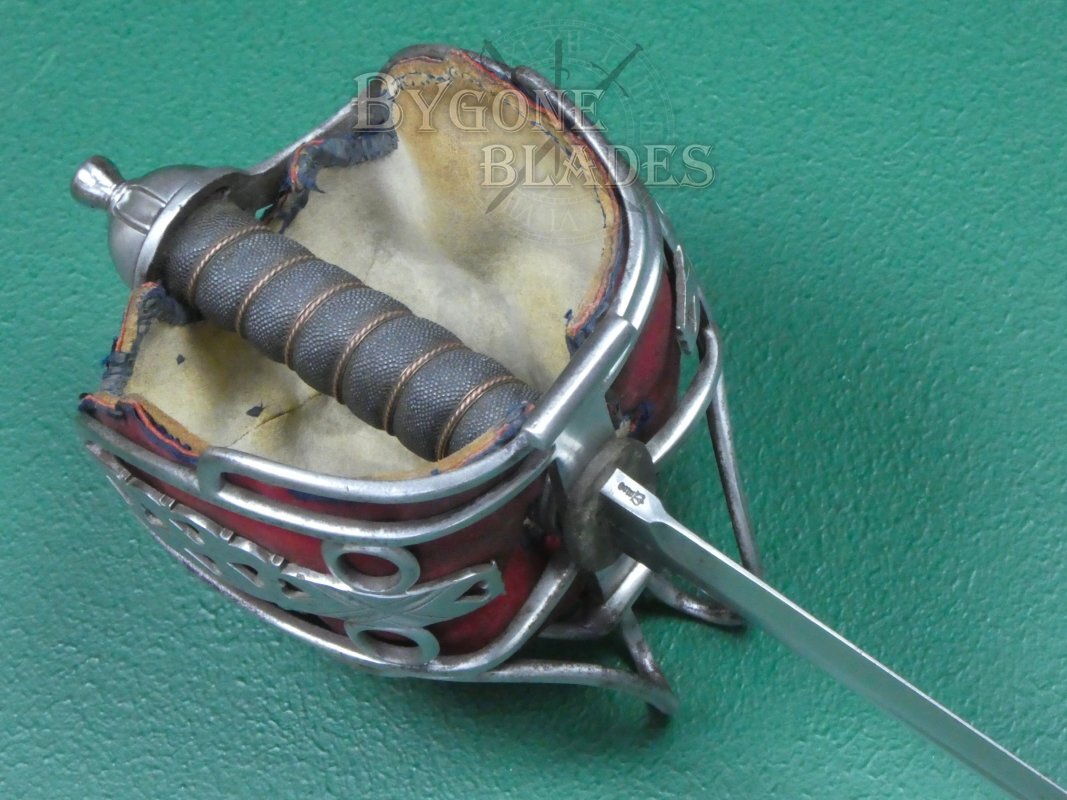
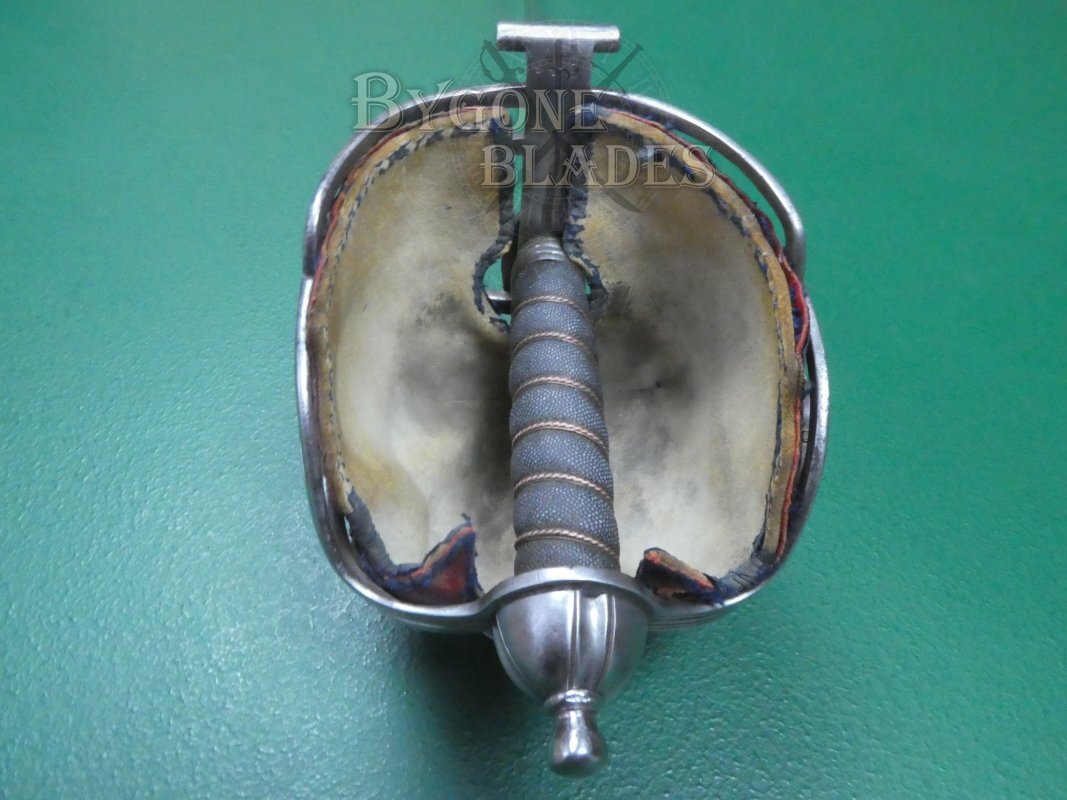
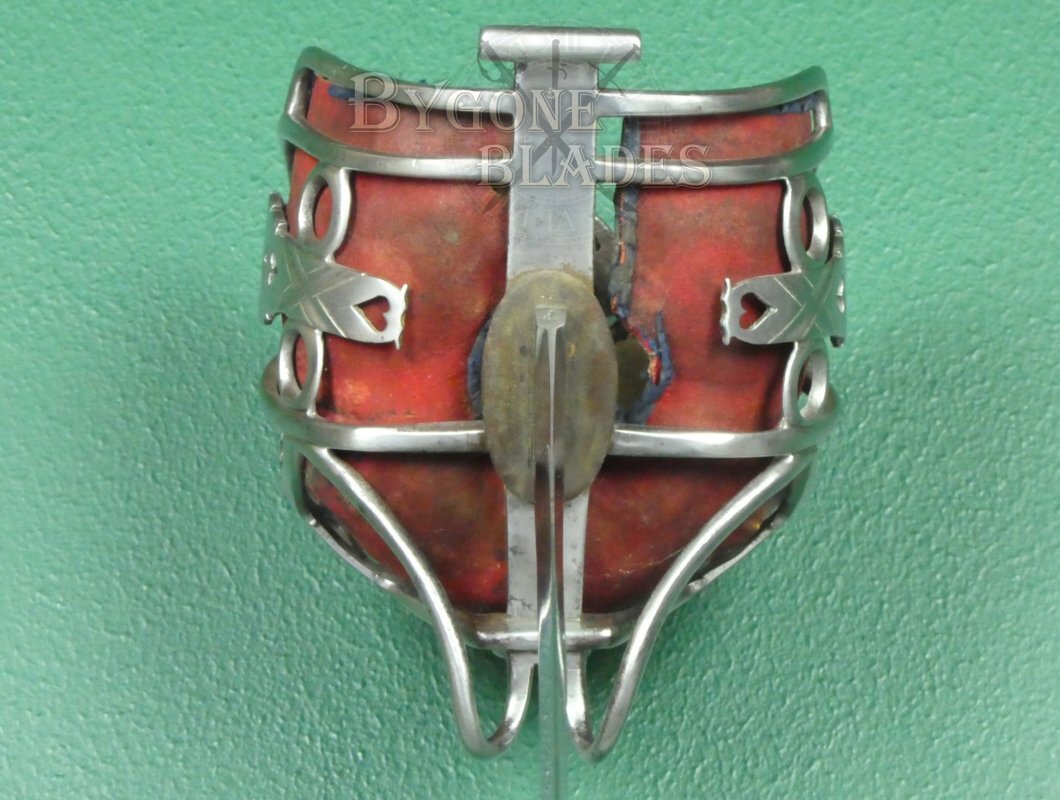
The regulation iron basket-hilt is composed of rounded bars united by heart-pierced junction plates. The shagreen wrapped grip is in great condition and the twisted copper wire is intact and tight. The basket retains its red felt-covered leather lining. The blade is firm in the hilt. The front of the quillon is stamped with 2 R. H. over the numeral, 9. The 2nd Battalion, The Black Watch (Royal Highlanders), weapon/issue number 9. The obverse of the quillon bears a Birmingham reissue stamp and the date 1 '13, suggesting that this sword may have also seen service in WW1.
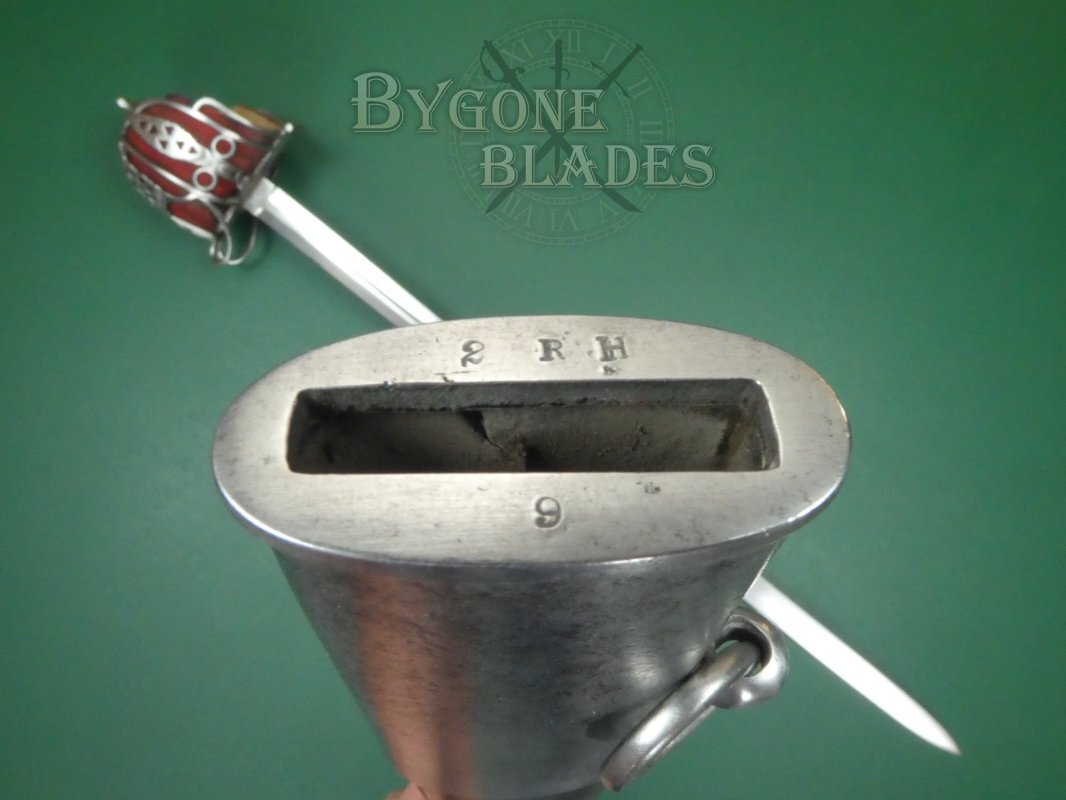
The sword is complete with its black leather scabbard with iron fittings and twin suspension rings. The mouth of the locket is stamped with the matching designation, 2 R. H. over 9. The iron furniture is in good condition with a speckled patina and very shallow pitting. The leather is in great condition and the stitched seam is intact. The sword sheathes and draws smoothly and is held firmly within the scabbard.
This is an excellent example of a scarce Black Watch staff-sergeants’ MK II pattern basket hilted broadsword that saw service in the Anglo-Boer War.