As you know, President Trump has decided that all USA citizens must pay import taxes on any items bought from overseas. He has withdrawn the $800 pre-tax allowance on imports and has also cancelled the exemption for antiques.
The amount of import tax payable is dependent on the country of manufacture of the item, NOT where it was bought/imported from.
For example,
The tariff on UK made items is 10% of the total amount, including the shipping fee.
On items manufactured in mainland Europe, the tariff is 15%.
Some countries incur a much higher percentage.
President Trump has insisted that these fees be paid BEFORE the item is imported, or the parcel will be refused entry into the US.
This basically means that Bygone Blades has to collect the US import tax from you and submit it to the carrier, who in turn pay the US customs.
After you have made your purchase, you will receive a separate invoice for the new import tax specific to the item purchased. This will need to be paid before your purchase is shipped.
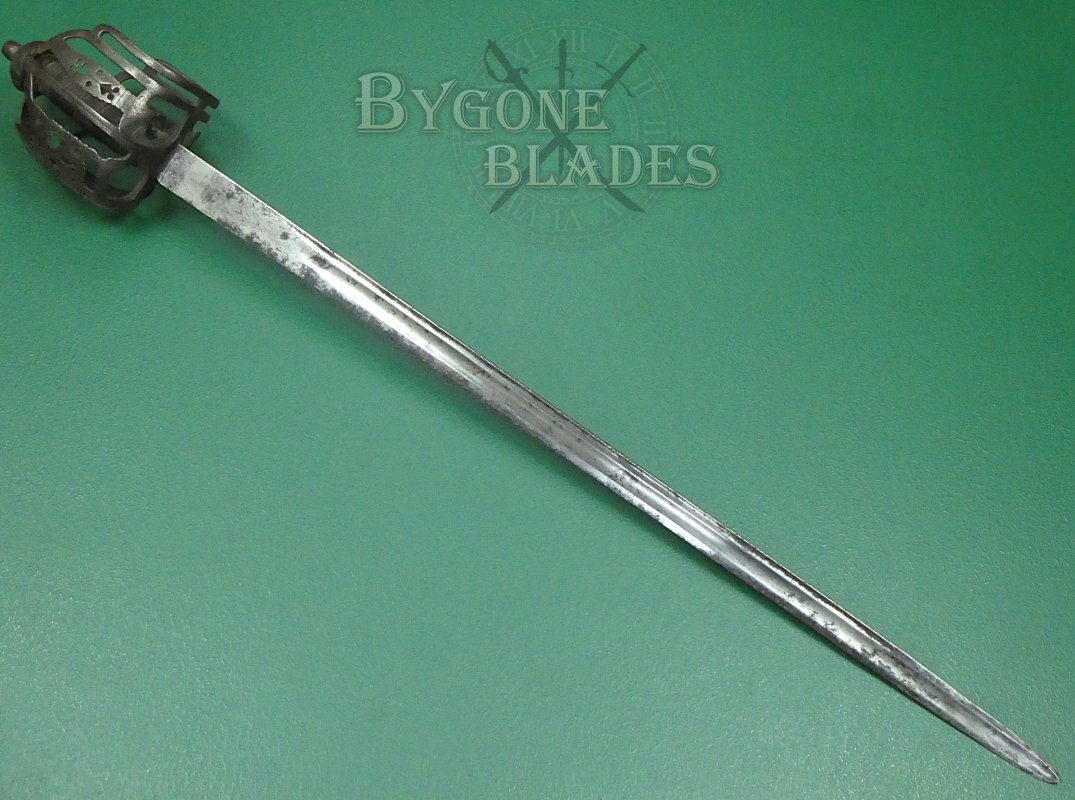
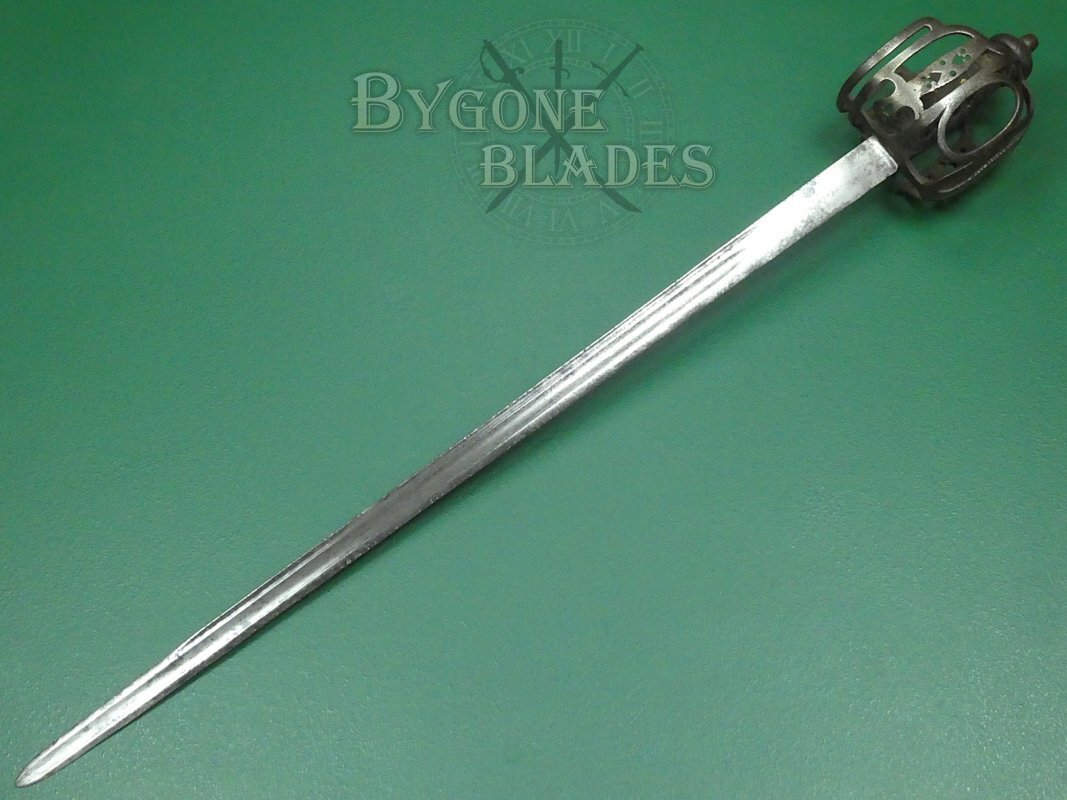
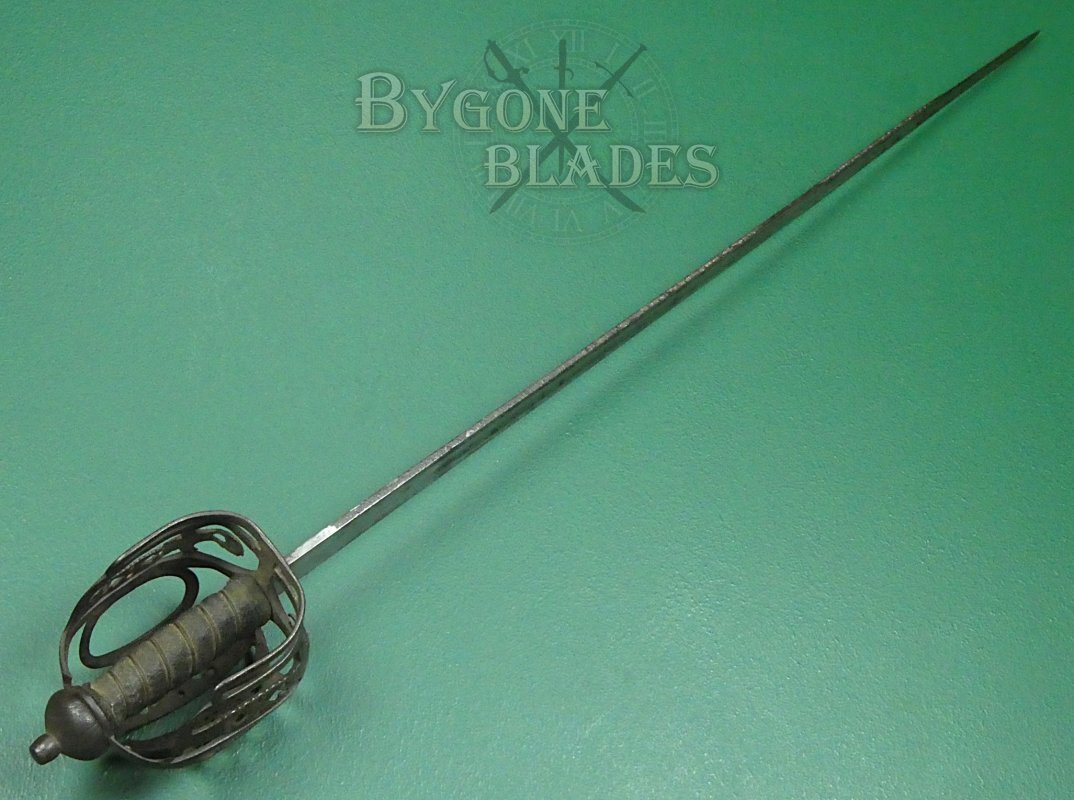
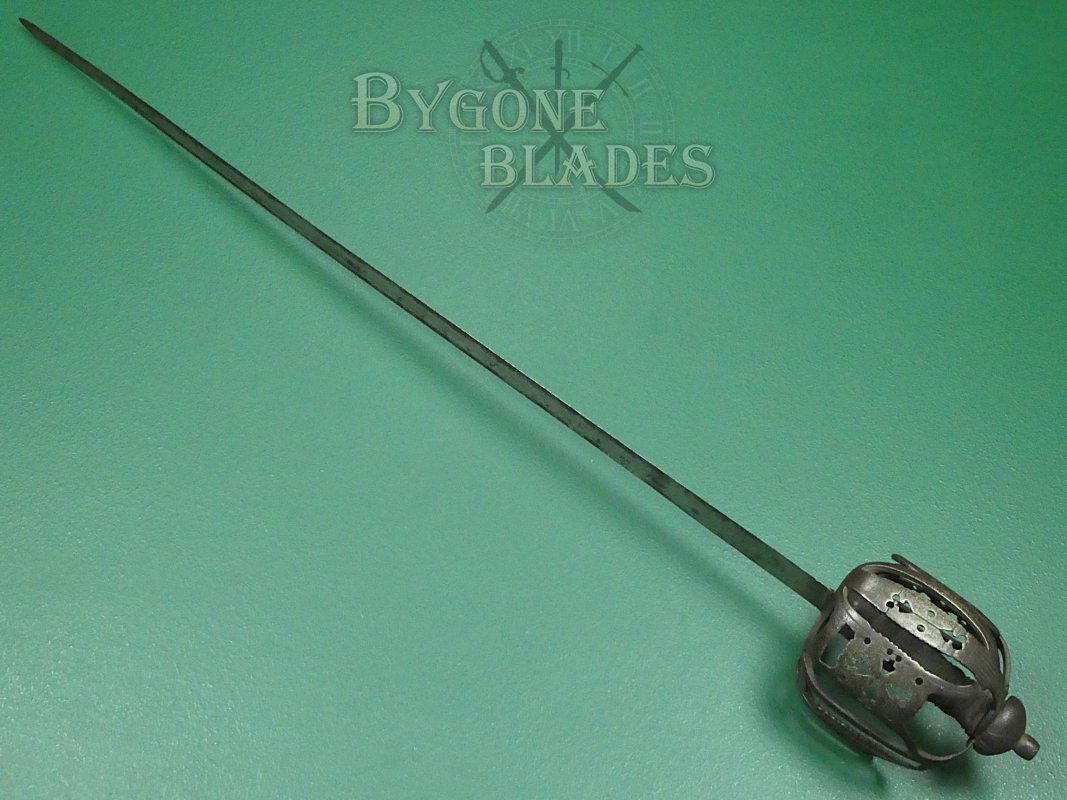
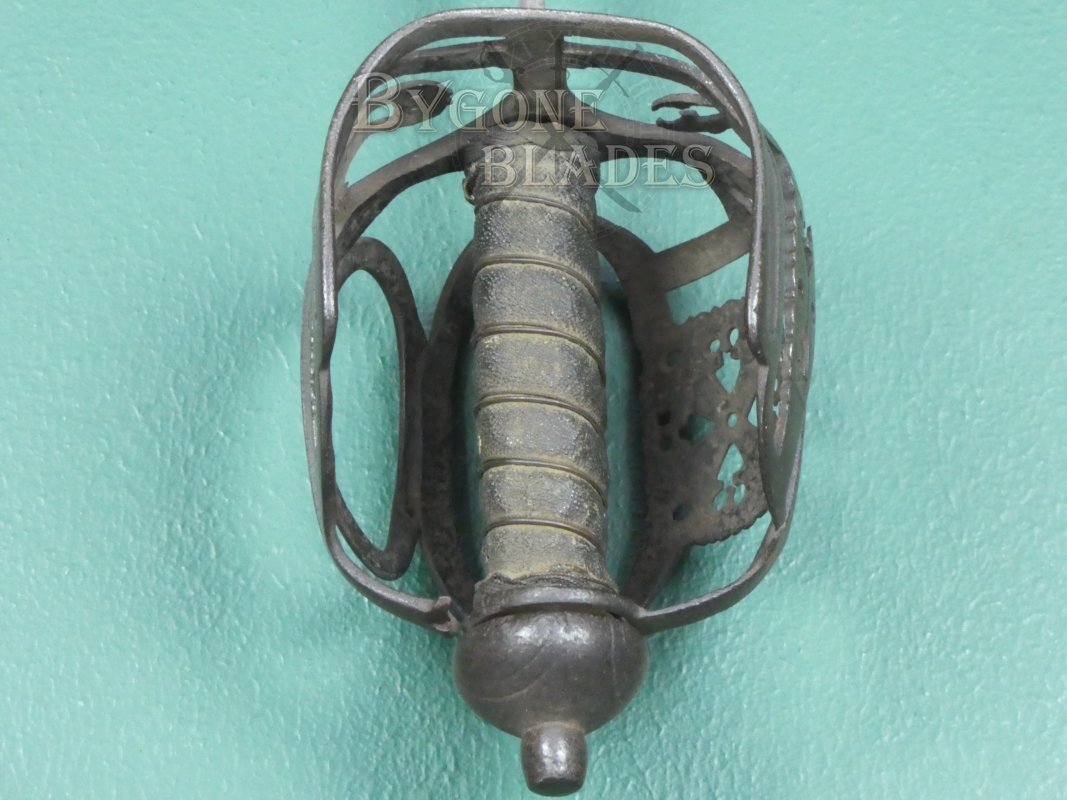
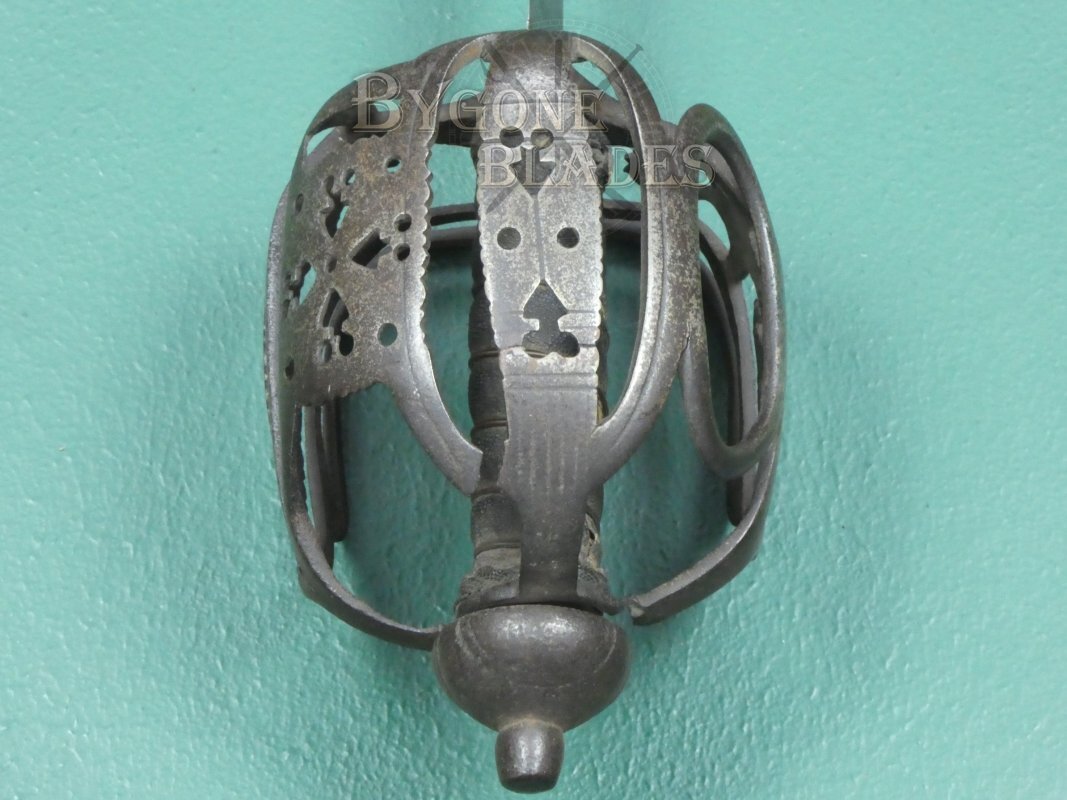
Culloden Period Basket Hilted Backsword. Circa 1740.
This basket hilted backsword, also known as a Dragoon backsword dates to around 1730-40 and was in use in the period of the Jacobean uprising that culminated at the Battle of Culloden in 1746. The sword was designed for use by mounted troops and incorporates a rein ring in the basket. Initially the sword would have had a blade length of between 34-36 inches (865-915mm). Many, if not most swords of this type had their blades shortened, either to fall in with changing military requirements or to make them a better length for fighting on foot. Swords such as this were used by mounted Scottish militia as well as British Dragoons. Many were also captured from British cavalry after the Battles of Preston Pans and Sterling and similar early successes for the Jacobite army.
The 792mm (31.25 inch) single-edged (backsword) blade has a narrow fuller below the flat spine and a wide central fuller running from the forte into the spear point. The blade is double-edged for the final 140mm. The blade is in good condition for its nearly 300 years of age, with a speckled patina and dark tarnish along the forward edge and spine. The blade is firm in the hilt and retains a fighting edge.
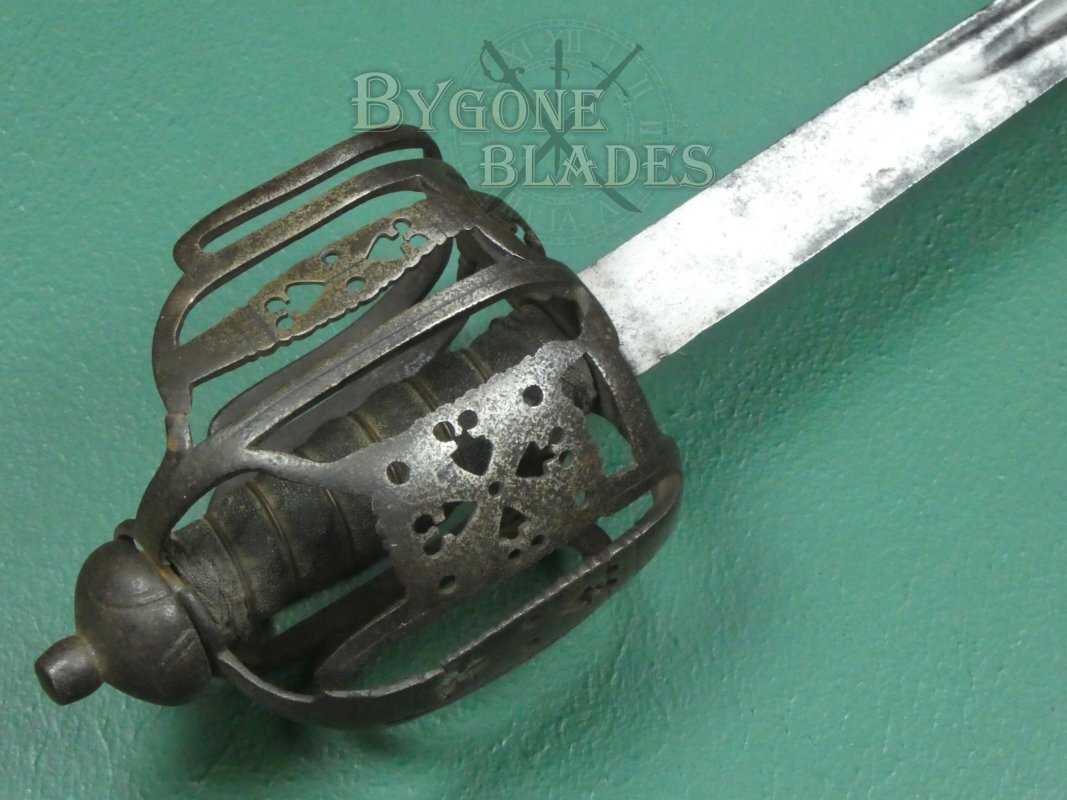
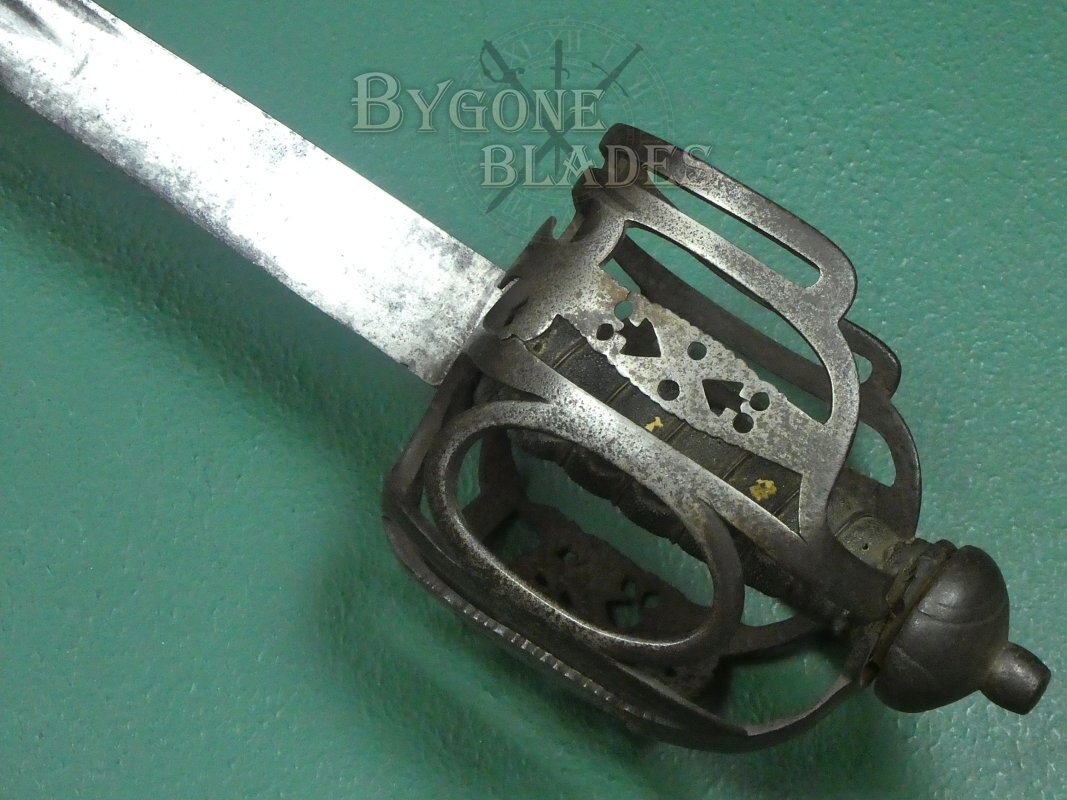
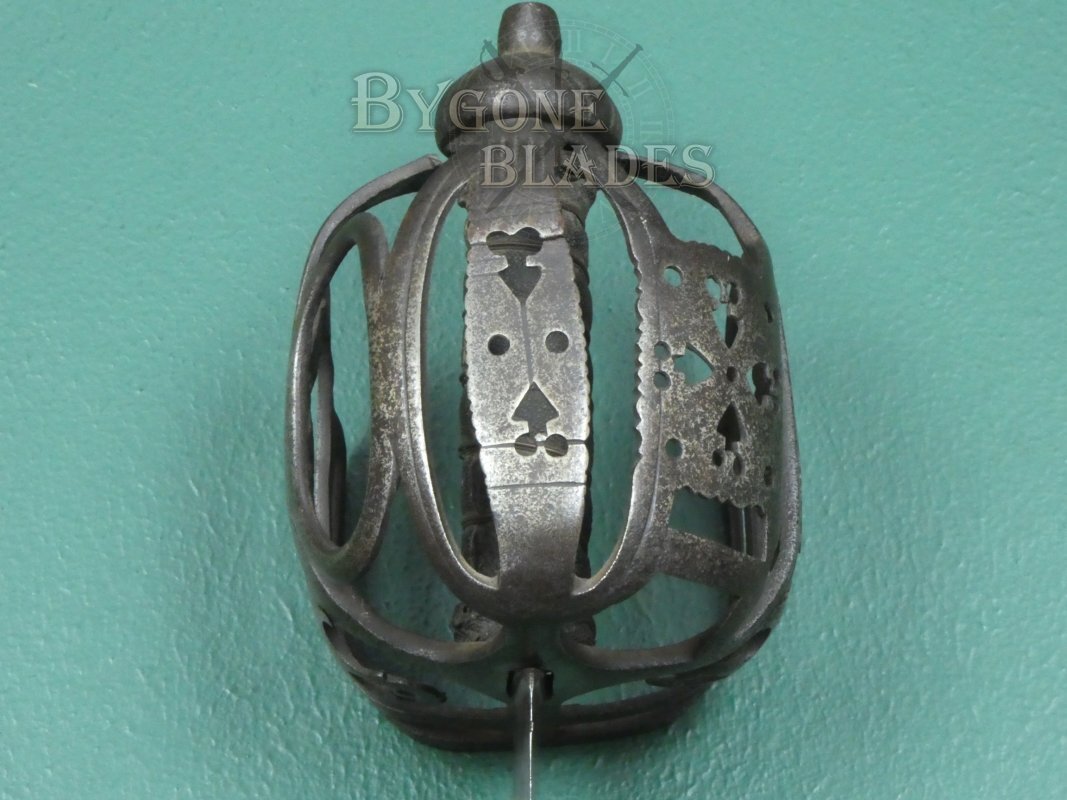
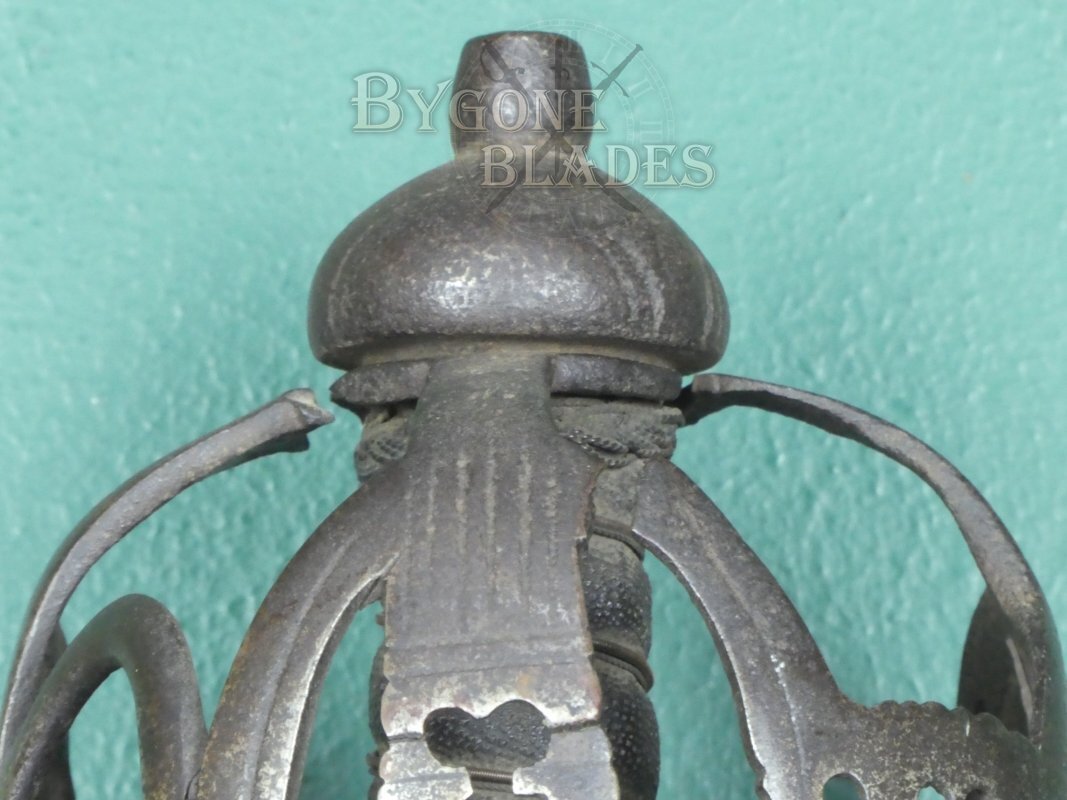
The hand-forged iron basket is pierced with arrows and dots on the scallop-edged junction plates. A rein ring on the bottom left of the basket allows for a rider to pass the reins through to hold them while wielding the sword. The shagreen wrapped wooden grip is in good condition with areas of use-related wear. The wire wrap is intact and tight, as are the woven wire collars at the top and bottom of the grip. The tang is peened through an incised iron (bun) pommel and the blade is held firmly.
The basket has suffered period damage. There are cracks to some junction plates and the forge-welds on the pommel ring and at the junction of the pommel ring and left branch have separated. The patina of the damaged parts is the same as that of the basket as a whole indicating that the damage is of the same period. There is some movement in the basket.
This is a good example of an early 18th Century basket hilted backsword despite the damage to the basket. The sword displays very well and has been a much-discussed part of my personal collection.
This broadsword is for sale from my private collection and as such cannot be purchased directly from the website. Please contact me, richard@bygoneblades.com if interested in buying this beautiful and rare sword.