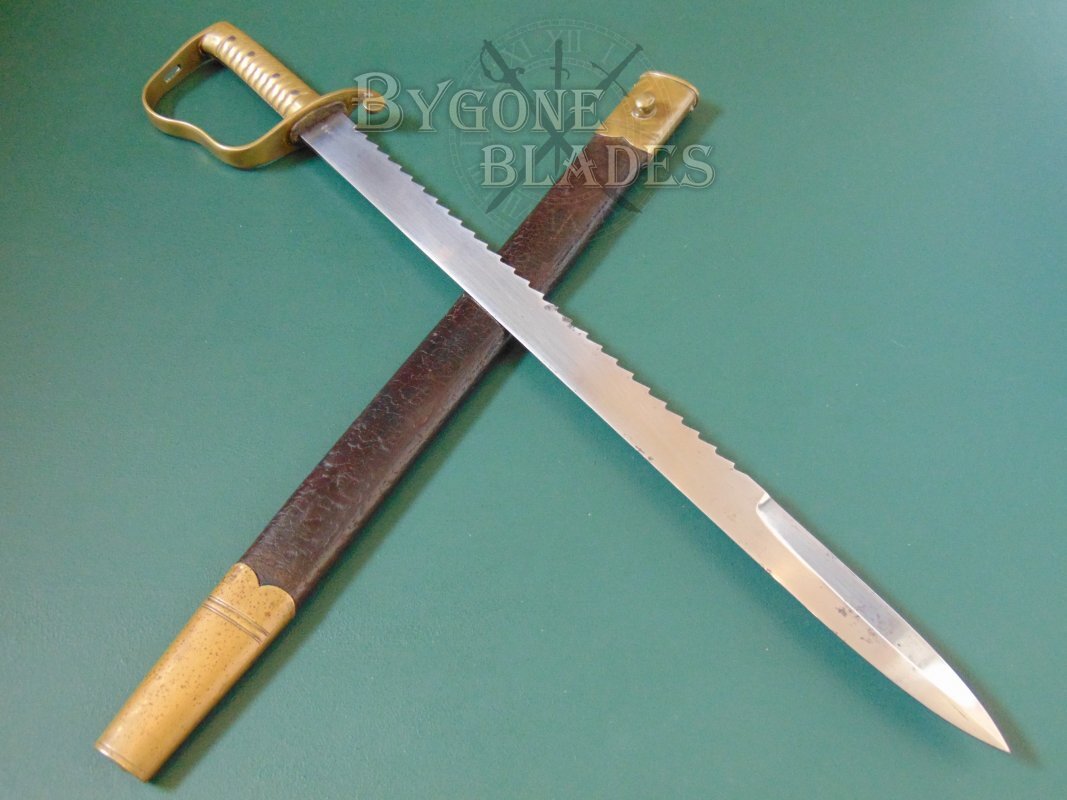
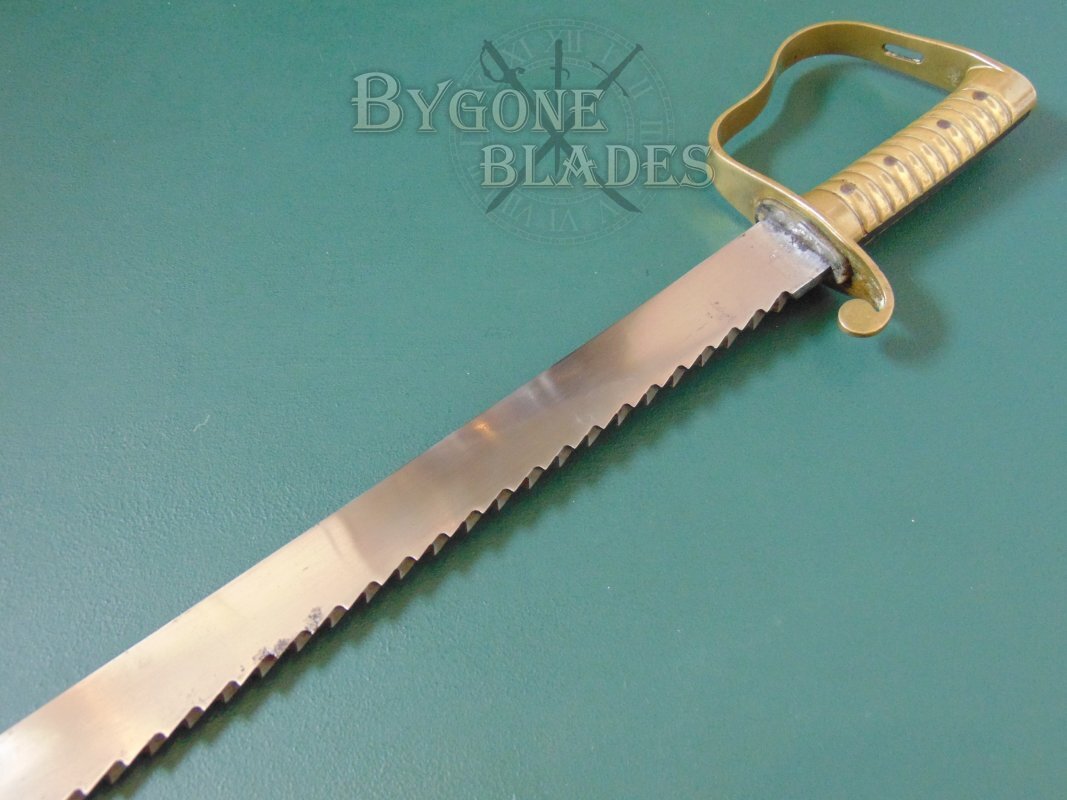
The British army has had several patterns of saw-back bayonets but only one saw-back sword. The pattern 1856 infantry Pioneers’ short sword (hanger) was issued to the Pioneers within each infantry battalion.
Each British infantry battalion had a ten-man squad of Pioneers, under the command of a corporal or sergeant. Their main tasks were to travel in advance of the main army, to clear the way and to undertake and supervise heavy construction work. The Pioneers were an early form of combat engineers.
Besides being a weapon, the saw-back sword was robust enough to replace the axes and hand saws usually carried by the Pioneers. The short, heavy blade could be used as both a saw and a machete and was of particular use when cutting brush to clear a field of fire and for clearing bivouac areas.
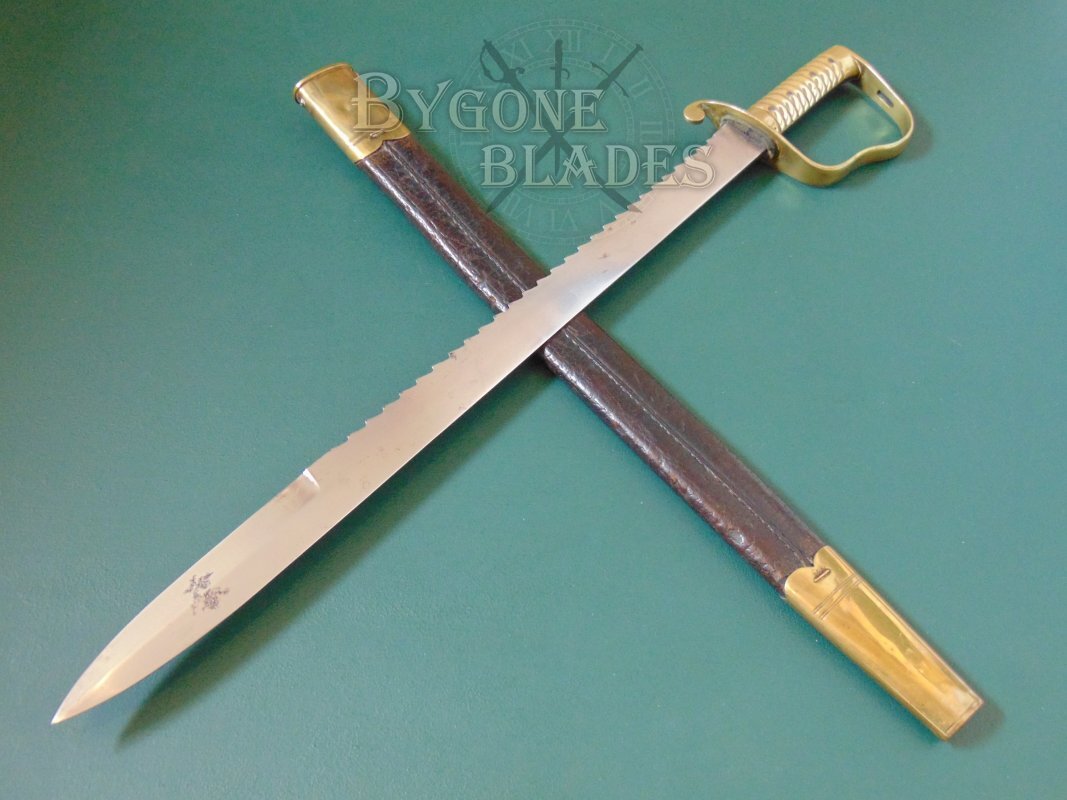
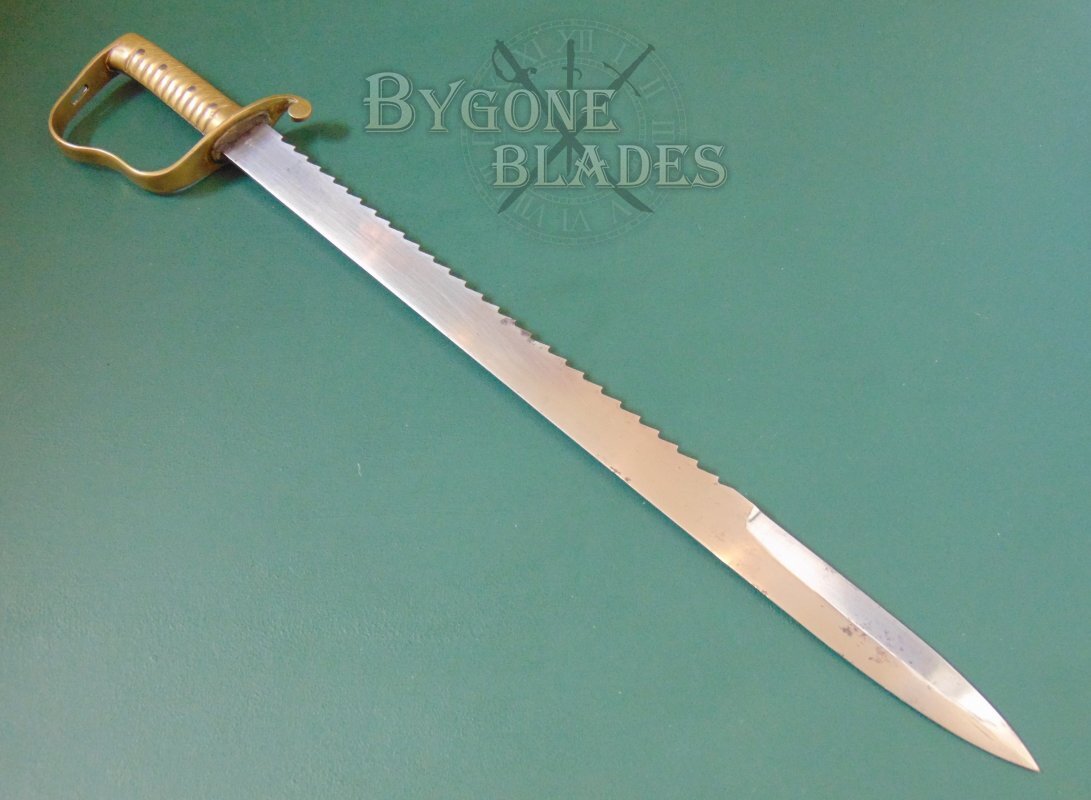
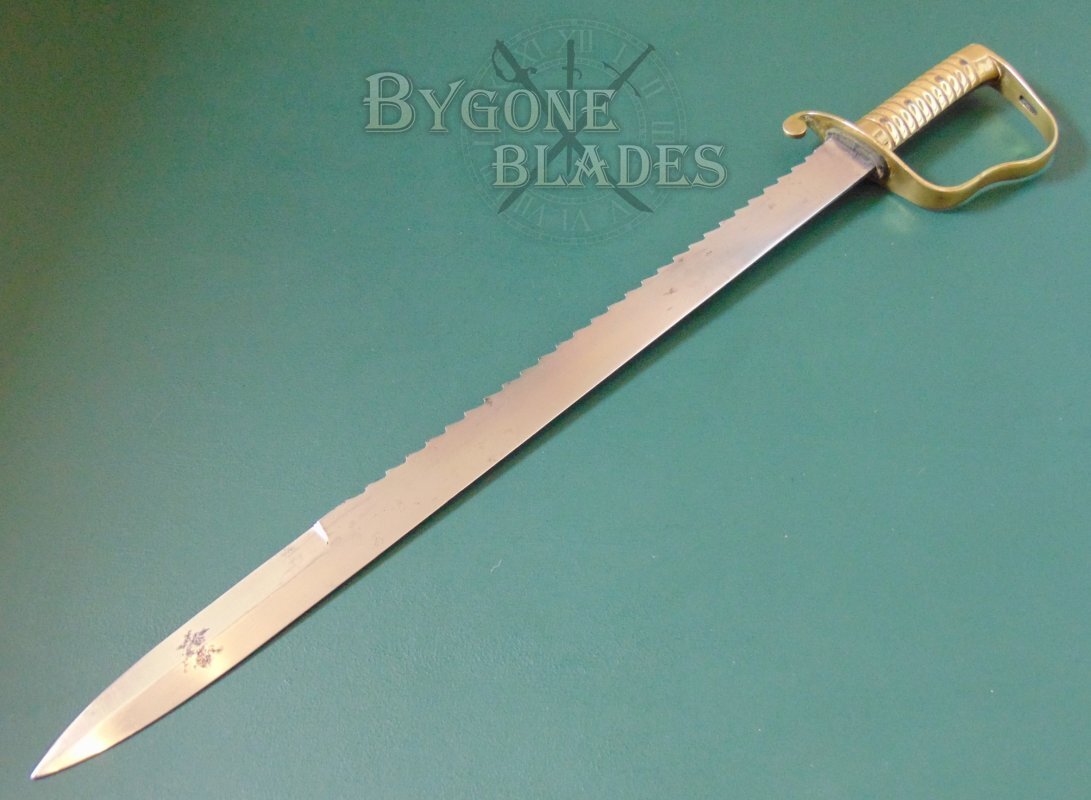
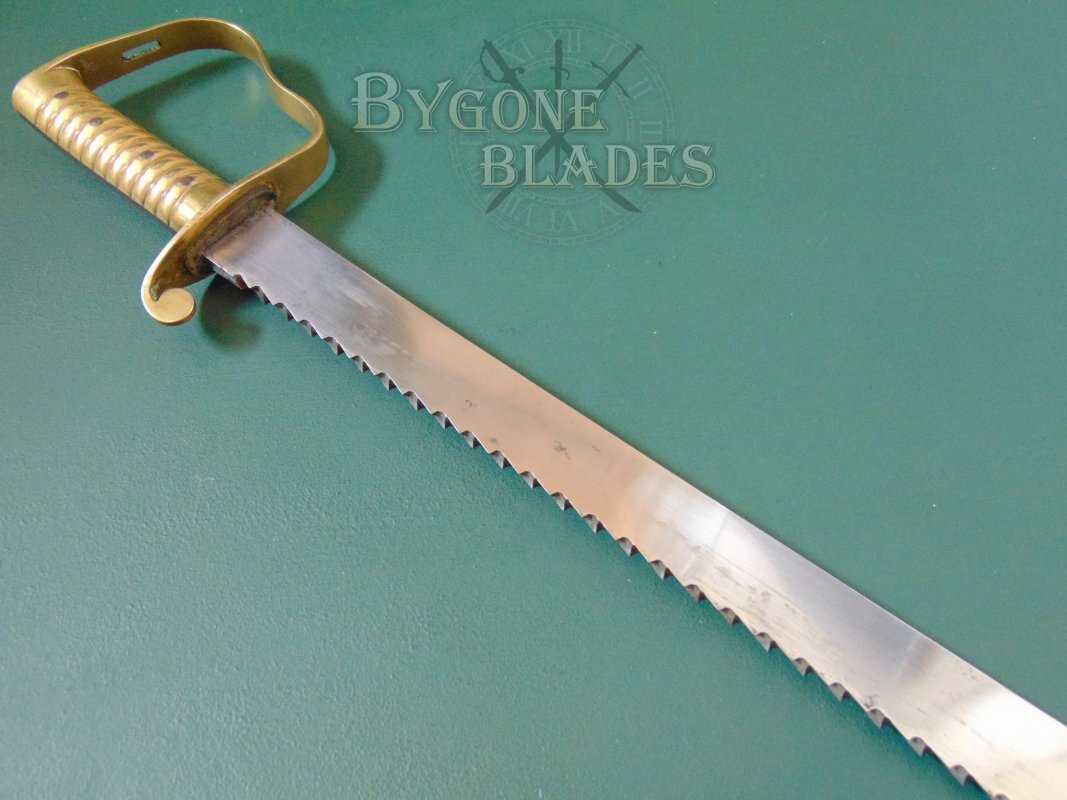
The 574mm blade has 27 pairs of saw teeth, extending for 390mm from the ricasso. The blade is double-edged for the last 165mm and terminates in a spear point. The saw teeth remain very sharp and the blade retains its upper and lower unsharpened factory edges.
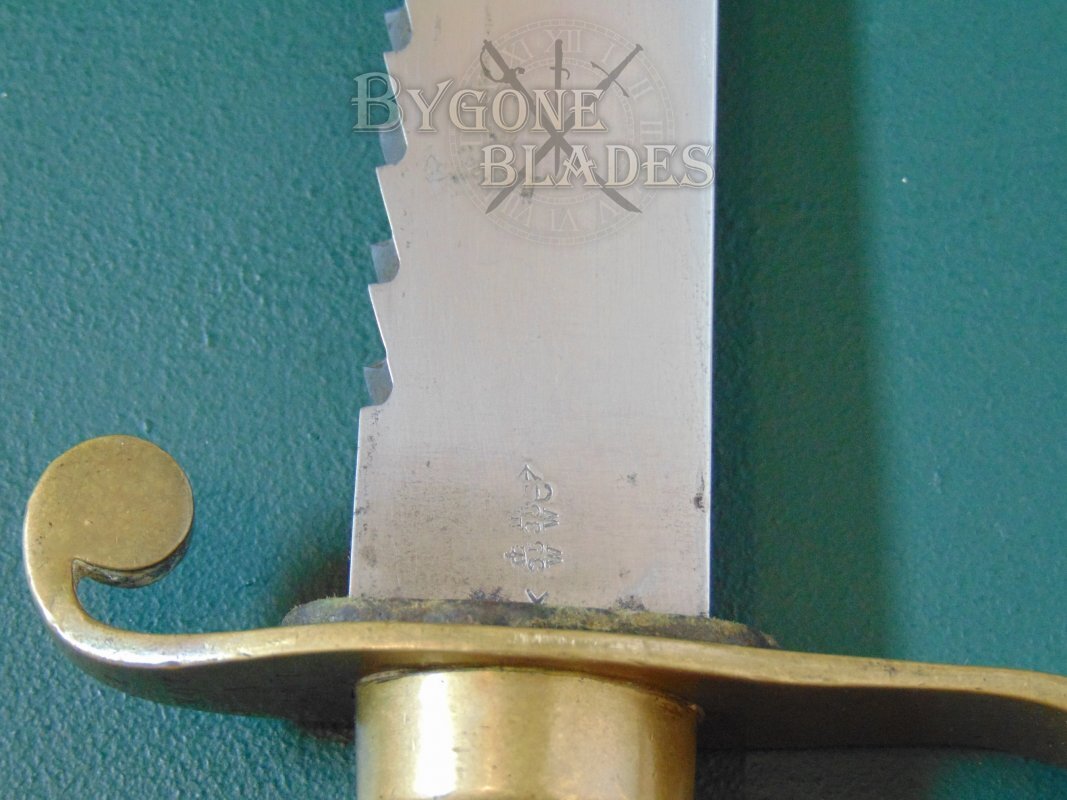
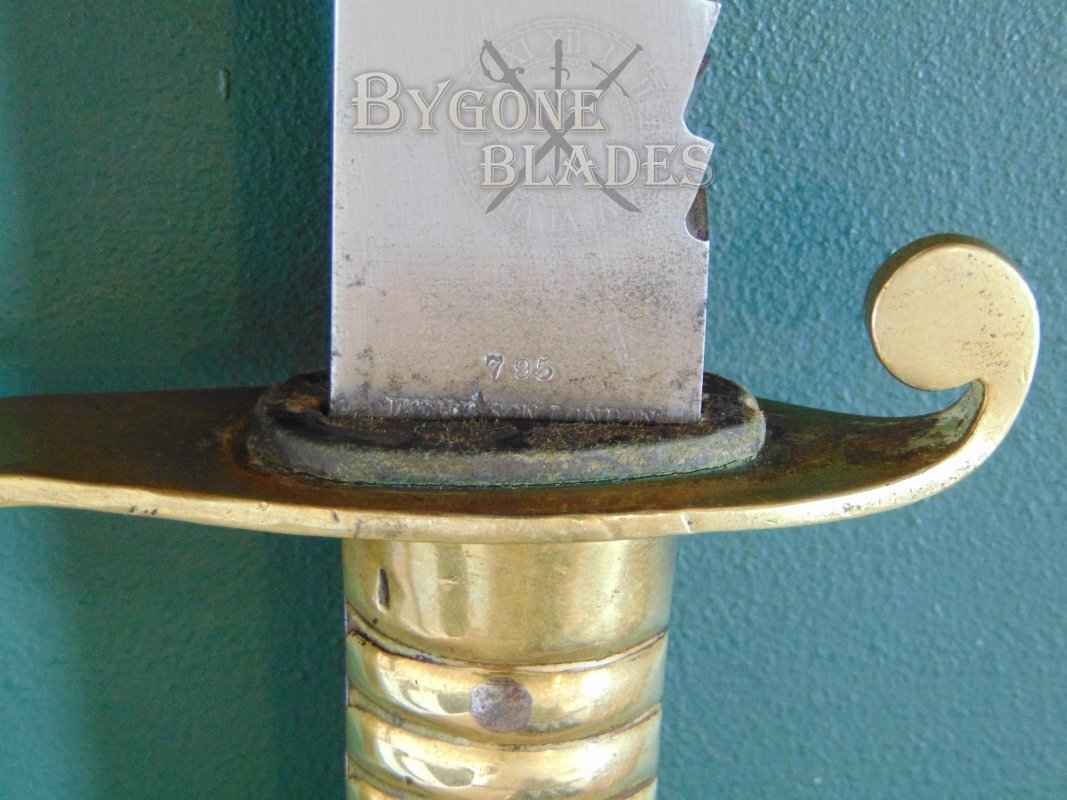
The ricasso is stamped with the War Department arrow and WD, a bend test X and two Wilkinson factory inspectors stamps. The obverse ricasso bears the fabrication date of ‘7 ‘95 for July, 1895. The blade is in excellent condition with only a few small patches of minor tarnish and some very light scratching.
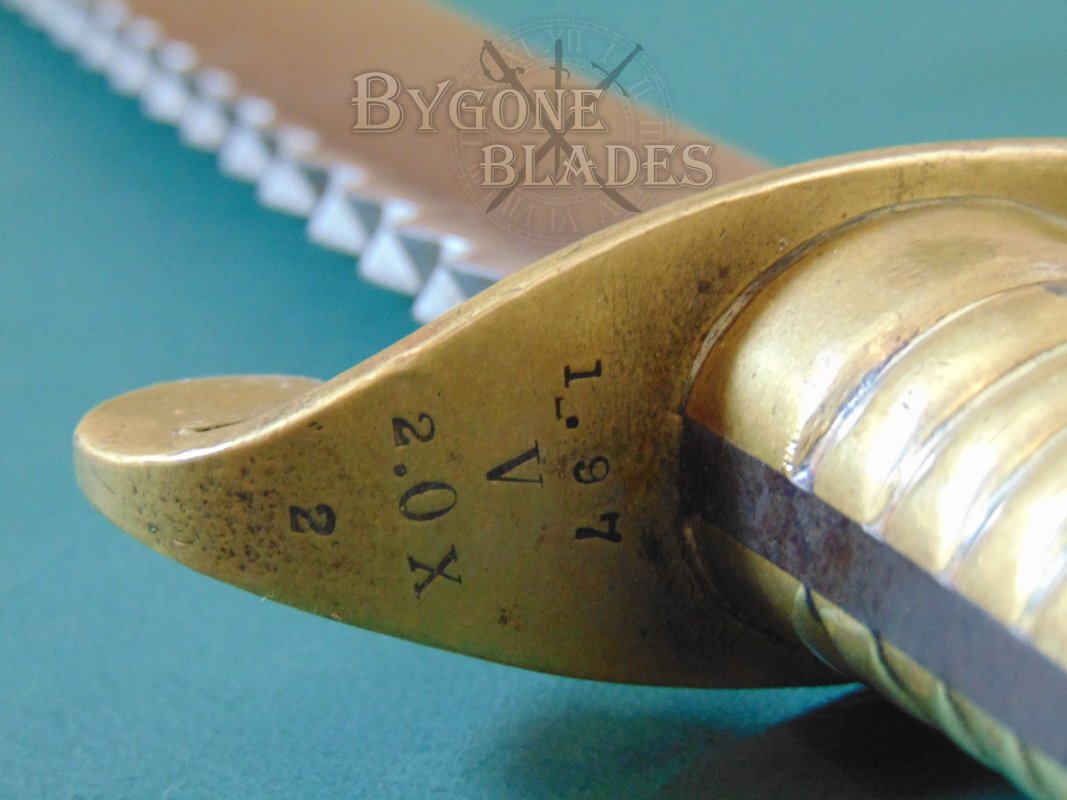
The blades’ full width tang is hilted with ribbed brass grip scales, held in place by four steel rivets. The thick brass stirrup guard has a short, flat disk quillon, which is stamped with the unit markings of the 2nd battalion of the Oxford and Buckinghamshire light Infantry.
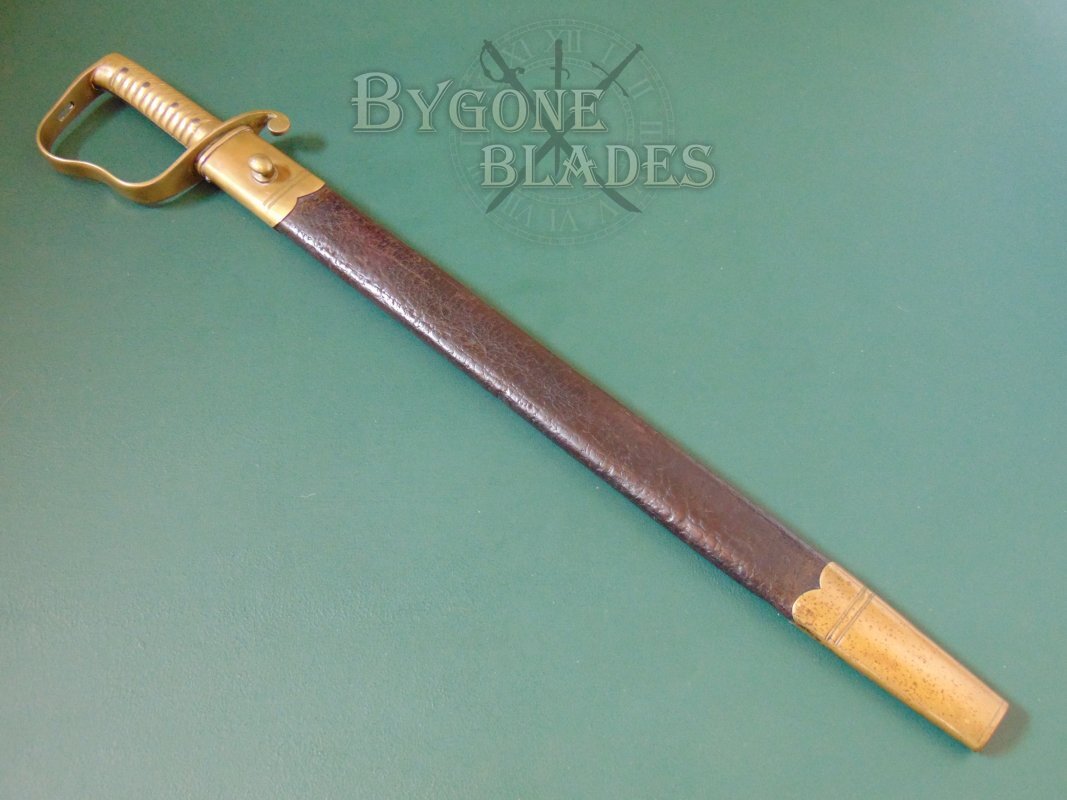
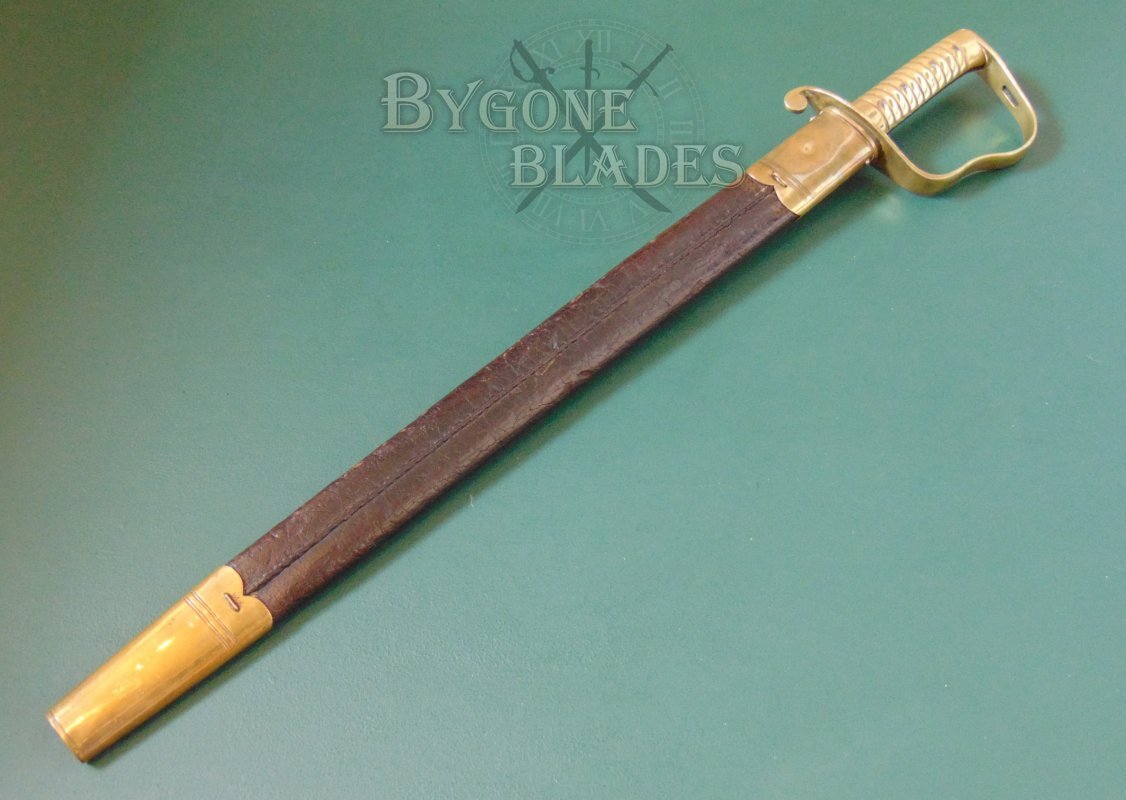
The sword is complete with its brass mounted leather scabbard. The scabbard is in very good condition. The leather is strong with crazing to the original finish and the stitching is intact and tight. The leather is stamped with a War Department arrow, date and inspection stamp. The sword sheathes and draws smoothly and is held firmly within the scabbard.
This is an excellent example of a scarce British Pioneers sword unit marked to a prestigious Line Infantry regiment.